VOYAGES A LA CARTE
NOS VALEURS

Archive Blog Detail

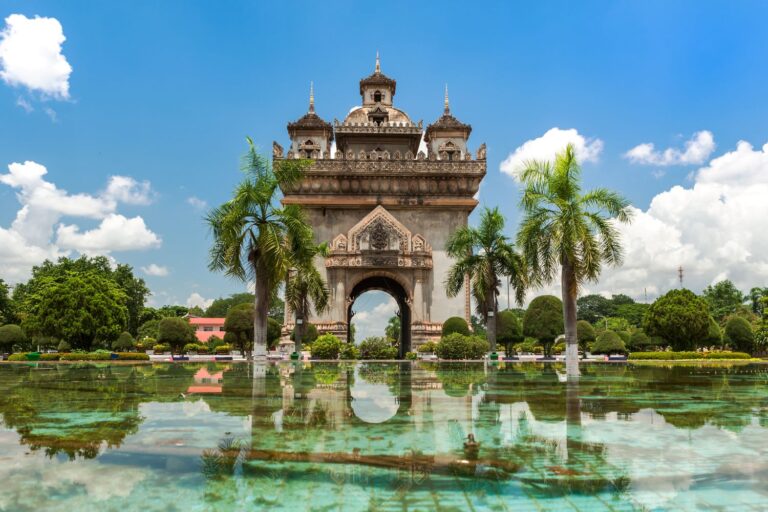
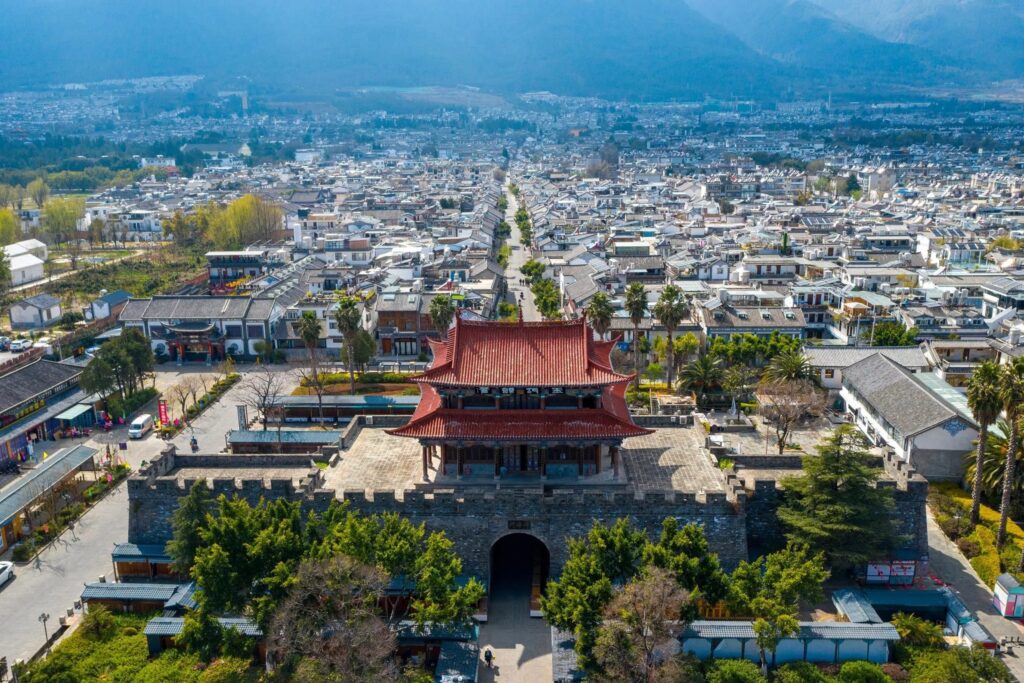
Merveilles de la Chine et du Laos
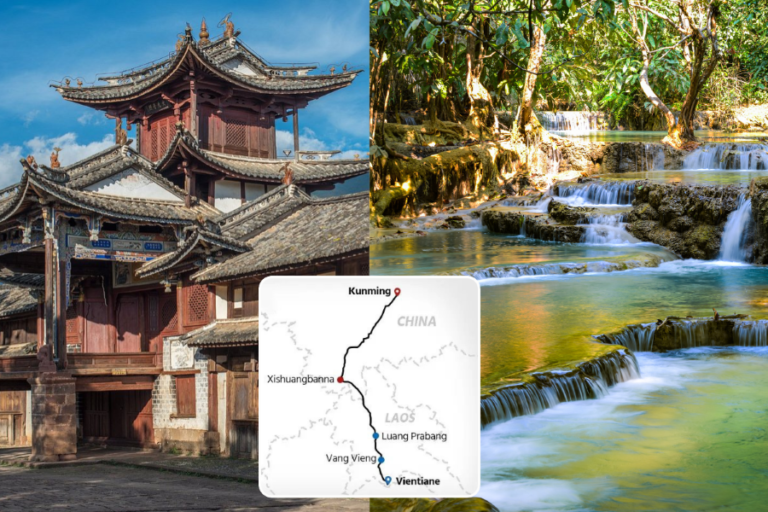
La ligne de chemin de fer à grande vitesse transfrontalière entre la Chine et le Laos offre un moyen rapide, confortable et bon marché pour voyager entre les deux pays. Construite dans le cadre du projet chinois des Nouvelles Routes de la Soie et ouverte en décembre 2021, elle traverse le Laos depuis la frontière chinoise au nord jusqu’à Vientiane et la frontière thaïlandaise. Avec des trains modernes et confortables, des horaires pratiques et des prix abordables, le chemin de fer est un excellent choix pour les voyageurs à la recherche d’une expérience authentique et inoubliable.

Asia My Way a le plaisir de vous présenter ses nouveaux itinéraires de voyage qui vous permettront d’explorer des paysages époustouflants, découvrir des cultures riches en histoire et des cuisines savoureuses variées.

8 JOURS/7 NUITS

Partez à la dzcouverte de ce circuit inoubliable de 8 jours à travers les plus beaux paysages du Laos. Du Buddha park aux chutes de Kuang Si, en passant par les activités ludiques du Living Land et d’un sanctuaire d’éléphants, toute la famille saura construire des souvenirs de voyages mémorables.

Cliquez ici pour plus de détails.

13 jours / 12 nuits

Embarquez sur ce circuit combiné de 13 jours pour découvrir les magnifiques sites de la Chine et du Laos. Des belles villes anciennes de Chine aux sites paisibles et envoûtants du Laos, il y a un quelque chose à admirer pour chaque membre de la famille.

Cliquez ici pour plus de détails.

14 jours / 13 nuits

Ce circuit en combiné, idéal en duo, vous emmène à la découverte des magnifiques sites de la Chine et du Laos. Ces deux destinations ont peut-être plus de choses en commun que vous ne le pensez, et elles ont toutes deux leur part de sites et haux lieux qui saura enchanter ses visiteurs.

Cliquez ici pour plus de détails.

CONSEILS DE VOYAGE AU LAOS

Le Laos est un pays enclavé qui offre des paysages et des attractions fascinants. D’un point de vue sauvage, avec ses montagnes luxuriantes, ses rivières sinueuses et ses villages laotiens reculés, aux tribus montagnardes isolées, aux chutes d’eau rapides et aux grottes souterraines, le Laos n’est rien de moins qu’une aventure qui n’attend que vous pour être découverte !

Terre d’optimisme et de convivialité, le Laos est considéré comme l’un des pays les plus accueillants au monde. Pour faire de votre voyage une expérience plus agréable et plus authentique, il vaut la peine de prendre le temps d’apprendre les choses à faire et à ne pas faire dans le pays. Cela vous permettra de tirer le meilleur parti de votre expérience et d’éviter tout faux pas culturel.

Soyez assuré que vous serez toujours accueilli par des habitants sympathiques, car cela fait partie de leur culture de faire en sorte que les visiteurs se sentent comme chez eux. Néanmoins, les coutumes mentionnées ci-dessus rendront votre séjour encore plus enrichissant.

En respectant les coutumes et la culture du Laos, vous obtiendrez beaucoup plus de votre expérience, vous gagnerez le respect de la population locale et vous aurez des interactions beaucoup plus authentiques et mémorables !

N’hésitez pas à nous contacter pour planifier votre prochain voyage à la découverte de ces destinations envoûtantes !

Archive Blog Detail

Des inspirations de voyage pour votre séjour au Laos
Le Laos est un paisible pays enclavé d’Asie du Sud-Est. Bien que souvent éclipsé par ses pays voisins – le Viêt Nam, le Cambodge et la Thaïlande – le Laos possède toujours sa part d’attractivité, avec l’avantage d’être moins fréquenté.

Ce petit pays d’Asie du Sud-Est est une destination abordable et passionnante à visiter. Du côté sauvage, avec ses montagnes ondulantes et luxuriantes, ses rivières sinueuses et ses villages laotiens reculés, aux tribus montagnardes isolées, en passant par les cascades et les grottes souterraines, le Laos n’est rien de moins qu’une aventure qui n’attend que vous pour être découverte ! Voici quelques-uns des endroits et des activités les plus passionnants à découvrir lors de votre voyage au Laos et plus particulièrement à Luang Prabang.

Soyez témoin de la beauté du Laos à travers ces lieux et activités incroyables:

1. CROISIÈRE AU COUCHER DU SOLEIL SUR LE MEKONG

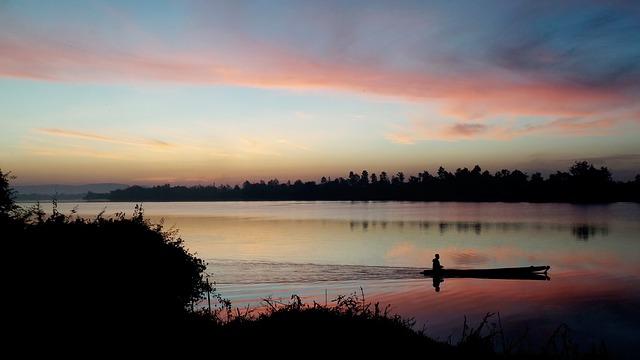
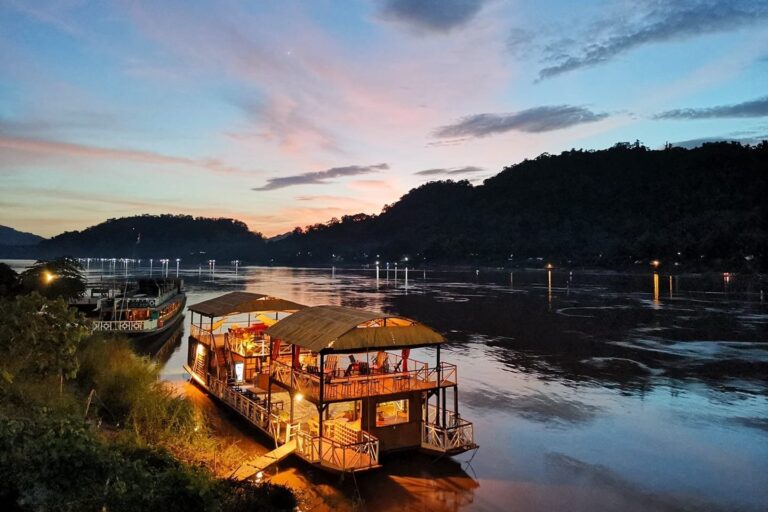
Installez-vous confortablement et profitez d’une balade relaxante à travers le magnifique paysage du coucher de soleil sur le majestueux fleuve Mékong. Cette croisière est la seule à naviguer à l’écart des rives de la ville, ce qui signifie que le coucher de soleil doré vous est réservé sans aucune perturbation. À bord, vous sera servi une boisson de bienvenue rafraîchissante et des en-cas pour que vous commenciez votre croisière en toute sérénité.

DURÉE : 2 heures
PRIX À PARTIR DE : 24$

2. CHUTES de tad sae

Faites l’expérience d’une retraite dans la nature en explorant la beauté de la cascade de Tad Sae. Située à 15 km au sud-est de Luang Prabang, la cascade de Tad Sae est une merveille naturelle spectaculaire dont vous pouvez profiter pendant la saison des pluies à Luang Prabang. Les cascades ne sont pas aussi hautes que celles de Kuang Si, mais il y a plus de courants d’eau se déversant sur des formations calcaires uniques, ce qui en fait un endroit idéal pour une baignade rafraîchissante.

Une merveilleuse activité d’une demi-journée si vous avez envie d’air frais et de passer du temps loin des foules de la ville.

DURÉE : Demi-journée
PRIX À PARTIR DE : 30$

3. Grottes de Pak ou

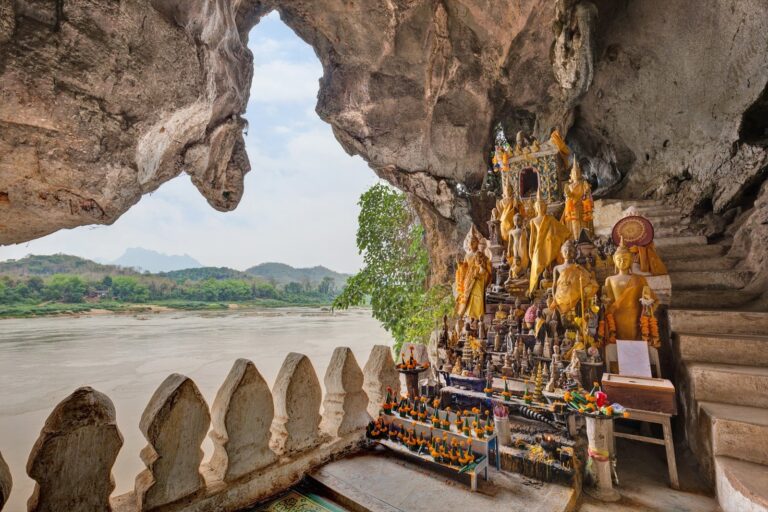
Également connue sous le nom de « grotte aux mille bouddhas », Pak Ou est un monastère troglodyte du XVIe siècle qui abrite des milliers de statues et d’images de bouddhas. Le voyage en bateau vers et depuis cette grotte sacrée est une expérience en soi, qui permet d’apprécier les superbes vues sur les montagnes calcaires et la vie au bord de la rivière. Sur le chemin du retour, vous aurez l’occasion de visiter des villages traditionnels où l’on boit du whisky.

Une merveilleuse expérience d’une demi-journée avec l’option d’une journée entière de croisière vers les chutes de Kuang Sy.

DURÉE : Demi-journée
PRIX À PARTIR DE : 65$

4. ATELIER DE TISSAGE AVEC OPK POP TOK

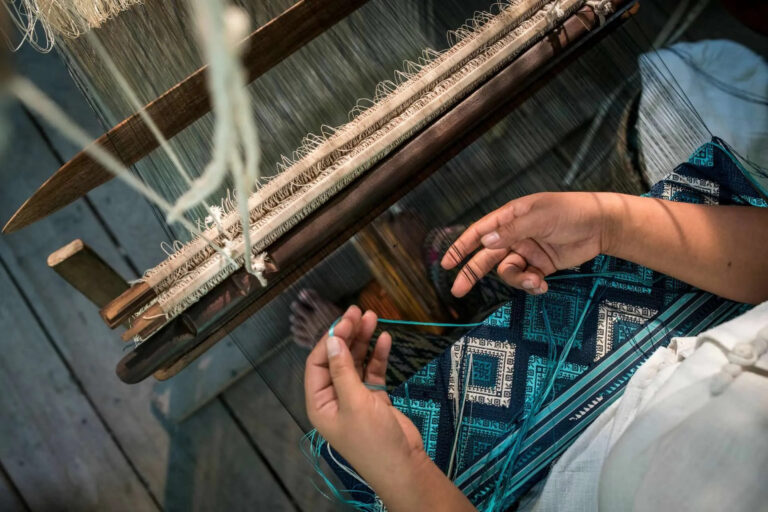
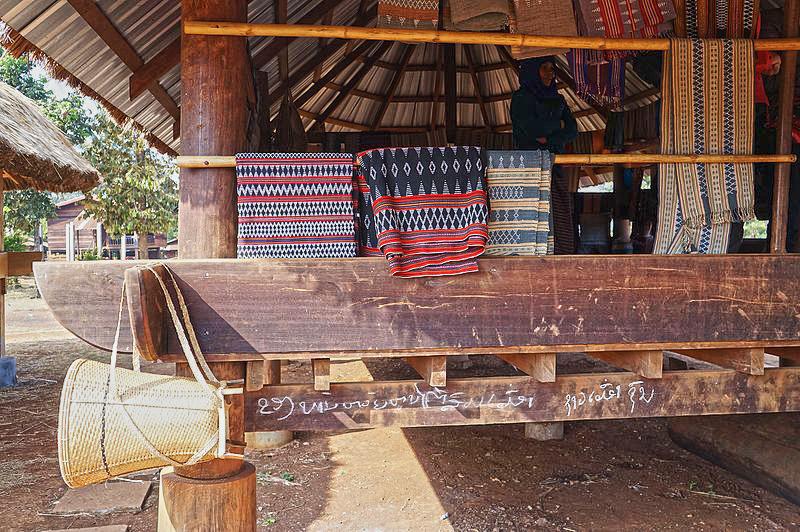
Situé dans des jardins tropicaux luxuriants et sur les rives du Mékong, le Living Crafts Center est l’endroit idéal pour en apprendre davantage sur le monde fascinant des textiles et de l’artisanat lao. Aux côtés des maîtres tisserands et des enseignants expérimentés, essayez-vous au tissage de la soie, à la teinture naturelle, au dessin du batik et au tissage du bambou, et rapportez un souvenir unique à la maison.

DURÉE : Demi-journée
PRIX À PARTIR DE : 52$

5. COURS DE CUISINE DE LA FERME A L'ASSIETTE

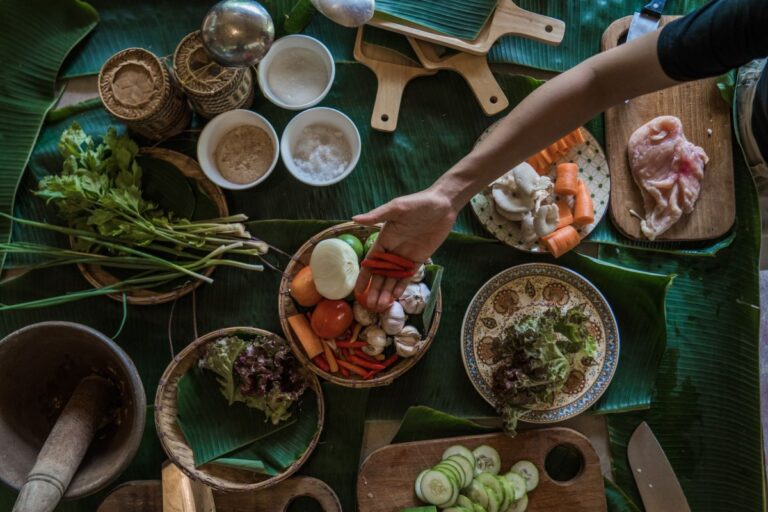
Essayez de préparer des plats traditionnels laotiens « de la ferme à l’assiette ». Récoltez vos propres légumes dans les jardins et les serres biologiques avec votre guide et votre chef. Vous suivrez ensuite les instructions de notre chef du pour cuisiner des plats locaux et traditionnels du Laos à partir de ce que vous aurez récolté. Une expérience amusante d’une demi-journée qui peut être appréciée en famille ou entre amis.

DURÉE : 3h
PRIX À PARTIR DE : 20

6. LIVING LAND : L'EXPÉRIENCE 100% RIZ

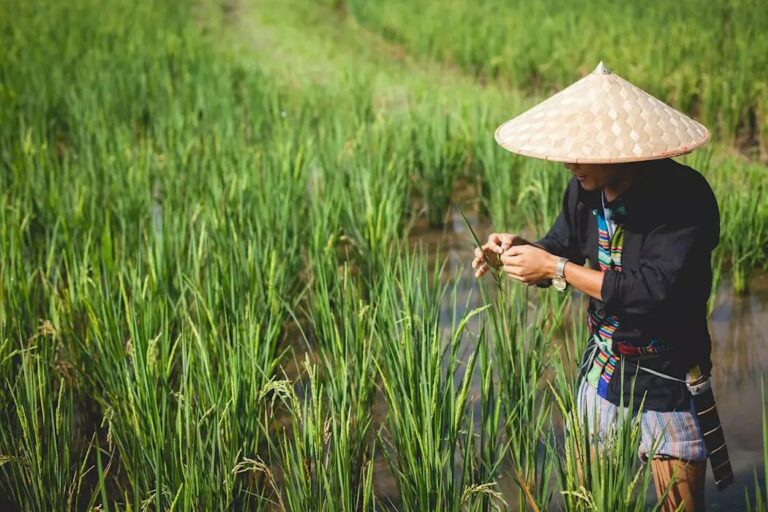
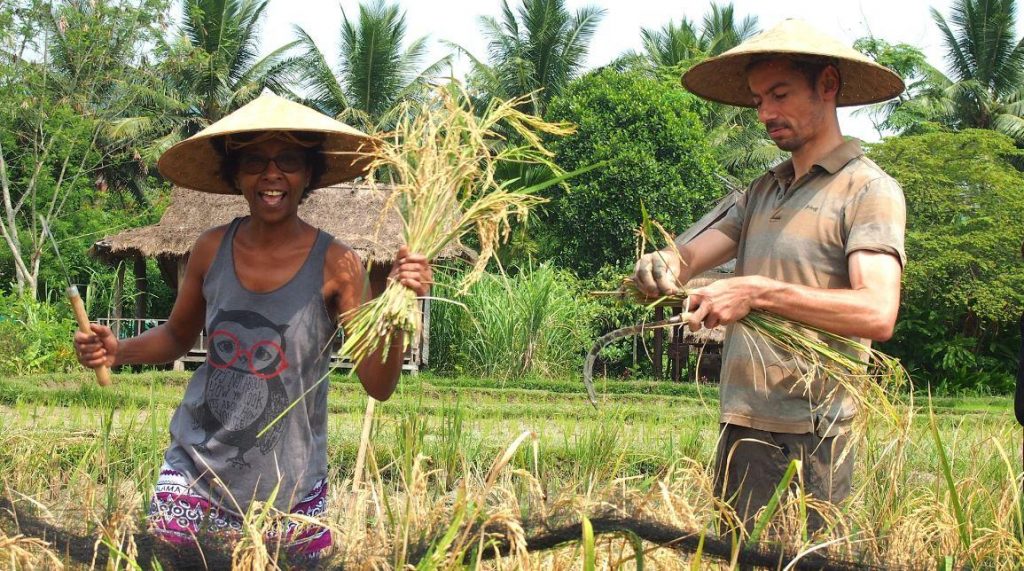
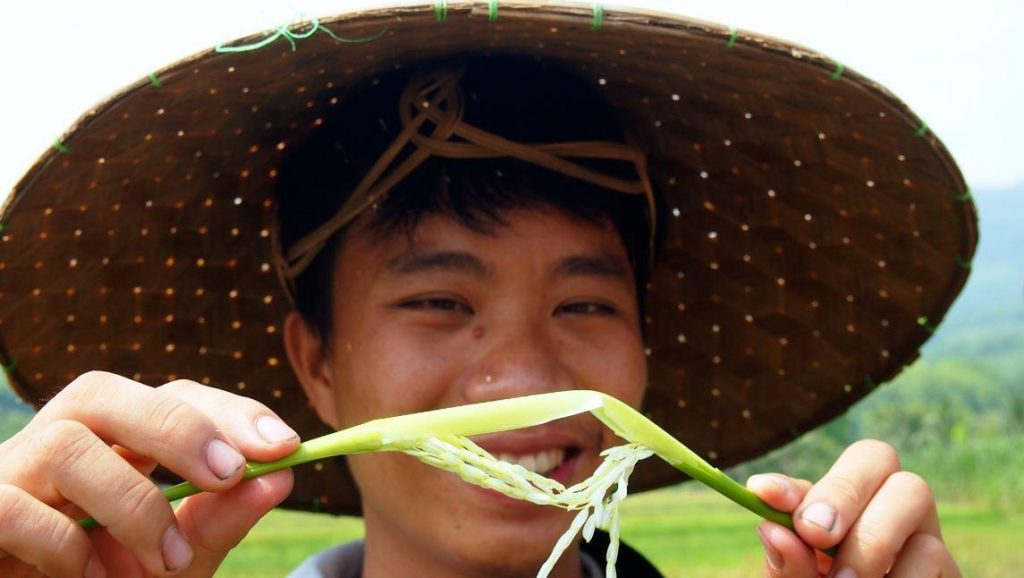
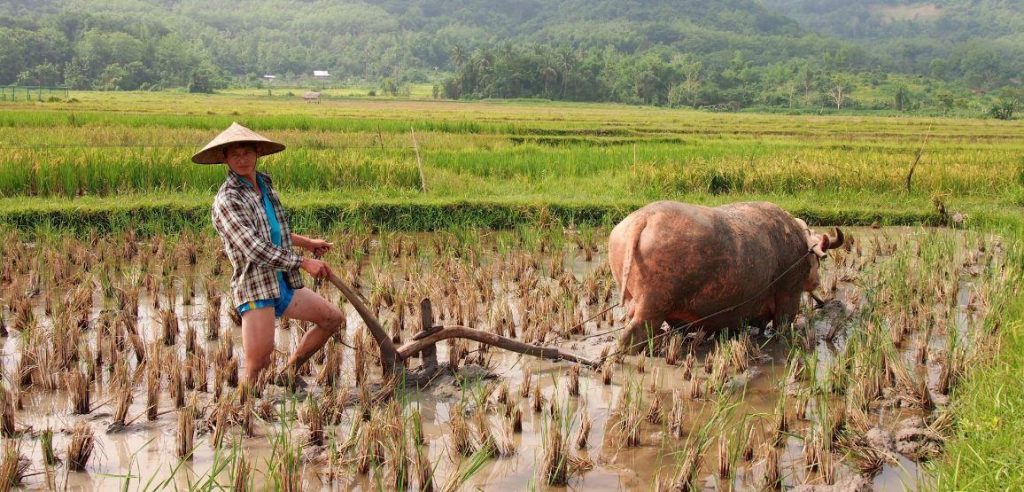
Apprenez tout sur le processus de plantation et de récolte du riz dans la rizière. Lors de cette visite, vous découvrirez comment le riz est cultivé et vous ferez l’expérience de la vie d’un riziculteur traditionnel, dans une ferme entièrement biologique gérée par une équipe locale et au profit de la population laotienne.

C’est amusant, éducatif, pratique et respectueux de l’environnement !

DURÉE : Demi-journée
PRIX À PARTIR DE : 20$

7. BAMBOU ExperiencE

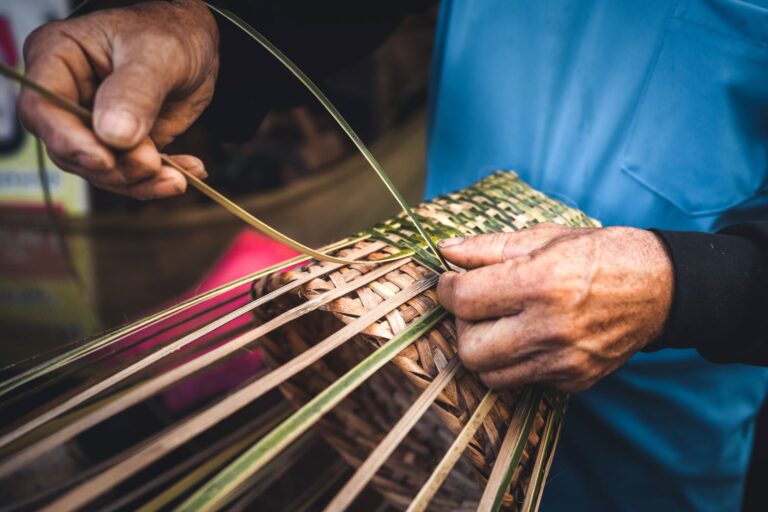
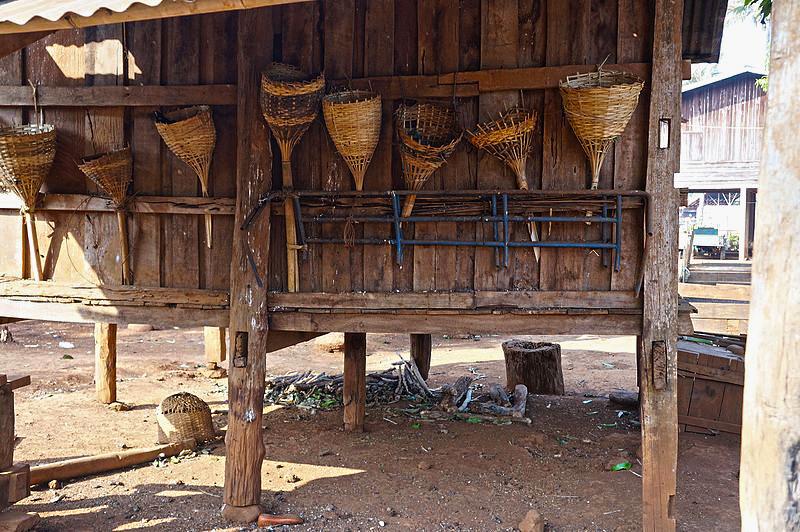
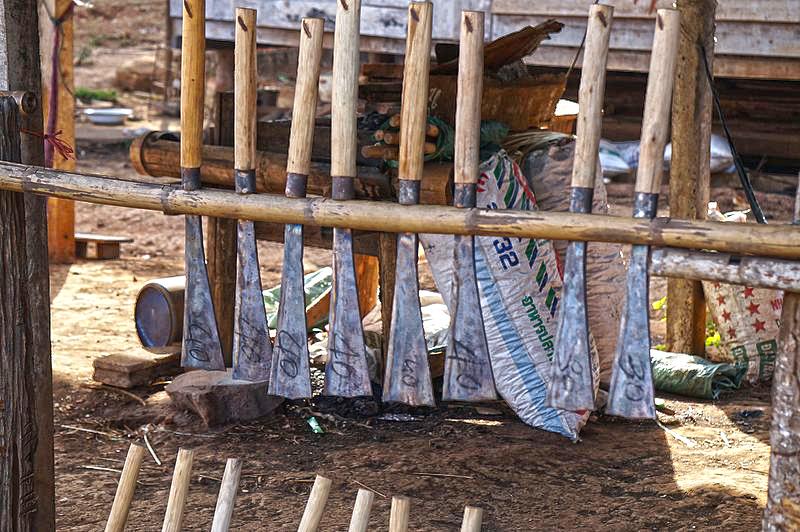
L’e bambou expérience est un atelier familial où vous aurez l’occasion de découvrir la culture laotienne à travers divers produits, activités et aliments à base de bambou. C’est l’occasion idéale d’entrer en contact avec la communauté locale et d’en apprendre davantage sur leur vie quotidienne.

DURÉE : Demi-journée
PRIX À PARTIR DE : 53$

Le Laos est un véritable paradis pour ceux qui aiment la culture, le climat et les paysages de l’Asie du Sud-Est. N’hésitez pas à ajouter le Laos à votre liste de voyages et CONTACTEZ-NOUS pour organiser votre voyage de rêve.

Archive Blog Detail

TOP 5 DES SITES INCONTOURNABLES DE LUANG PRABANG – LAOS
Chez AsiaMyWay, votre spécialiste local de l’Asie du Sud-Est depuis plus de 20 ans, nous avons pensé à vous. Pour vous aider lors de votre prochaine escale, dans l’ancienne capitale du Pays du Million d’Éléphants, nous vous présentons aujourd’hui des 5 sites incontournables à découvrir en voyage à Luang Prabang, Laos.

1 - Kuang Sy

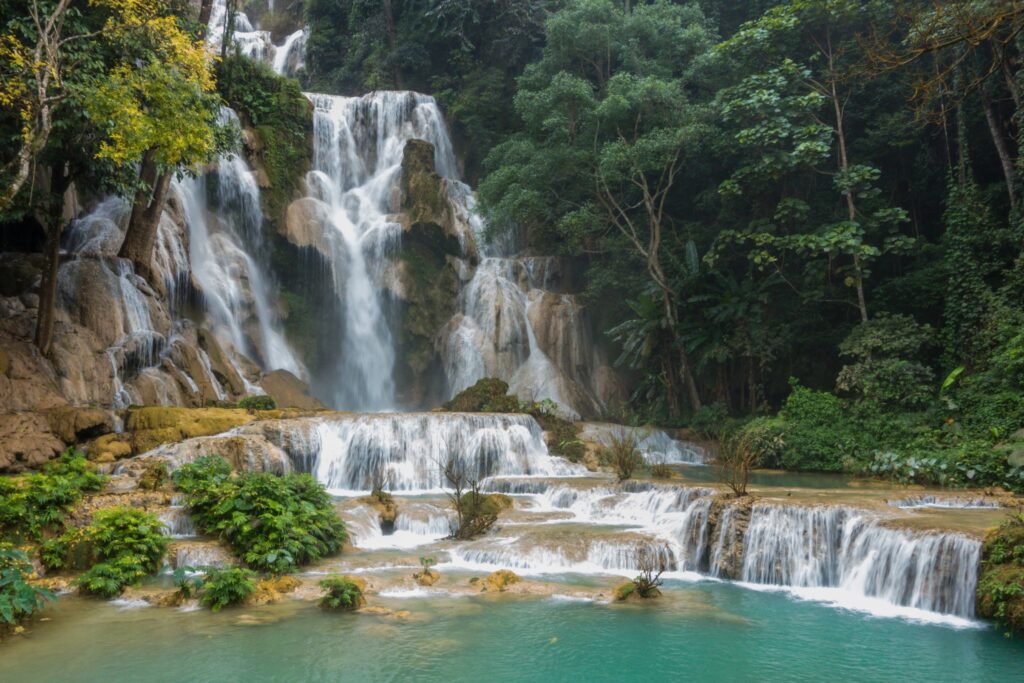
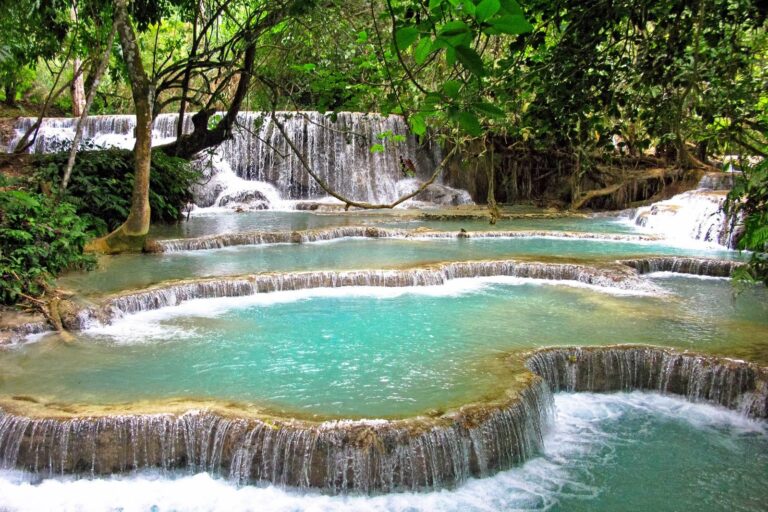
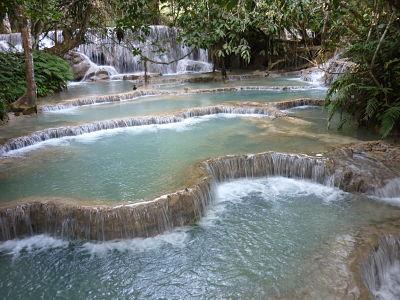
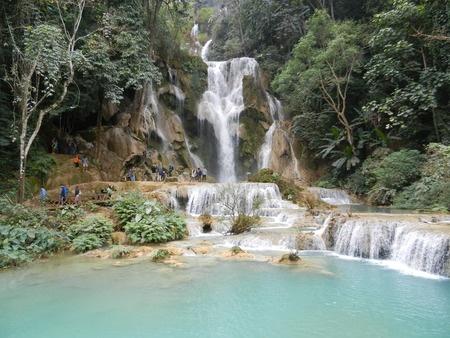
S’il y a un endroit à ne pas manquer, c’est bien celui-là. Nichées dans la forêt à quelques kilomètres de Luang Prabang, les chutes de Kuang Sy constituent un véritable site enchanteur. Les eaux qui s’écoulent à travers plusieurs bassins d’eau turquoise, en cascade au milieu de la végétation, offrent des nuances de bleu et de vert à couper le souffle. Ces eaux turquoise incitent à la baignade dans le respect des mœurs laotiennes.

2 - Living Land Farm

Un des endroits les plus recommandés par notre agent local. Cette ferme située à seulement 30 minutes de route de Luang Prabang vous permettra de découvrir et de participer à toutes les étapes de la culture du riz : de la plantation à la récolte jusqu’à votre assiette. Living Land est un projet de tourisme communautaire mené par Mr Launt. Living Land milite pour une culture raisonnée du riz sans utilisation de pesticides et finance des cours d’anglais et de soutien scolaire pour 7 élèves des villages voisins sélectionnés en début d’année par les professeurs en fonction de leur mérite et qui tous issus de familles en difficulté.

3 - LA MONTAGNE PHOUSI

Cette colline sacrée située au centre de la ville est accessible par un long escalier au milieu de nombreuses pagodes. Après avoir gravi le sommet, vous serez récompensé par une magnifique vue panoramique sur la ville et ses rivières. Nous suggérons à nos clients de s’y rendre au moment du coucher du soleil pour admirer un décor d’autant plus apaisant.

4 - LES WATS

Luang Prabang est la ville des temples. Classée en 1995 au patrimoine mondial de l’UNESCO, elle reste un symbole du bouddhisme en Asie. On peut y compter plus d’une soixantaine de temples. Parmi ceux recommandés par notre agent local, il y a le temple XiengThong, le plus beau temple de la ville royale qui possède un vaste ensemble de bâtiments sacrés. C’est l’un des joyaux de l’art lao. Découvrez-le avec l’un de nos guides locaux avec qui vous pourrez en apprendre davantage sur l’histoire de ce magnifique temple et de la religion bouddhiste.

5 - PARC NAHM DONG

Pour terminer ce top 5, nous proposons également d’accompagner nos clients non loin de Luang Prabang, au parc Nahm Dong. Basé sur l’éco-tourisme, le parc est un paradis pour les amateurs d’activités de plein air et permet un retour à la nature. Entre les cascades, la forêt, une ferme biologique, un petit zoo, ùne ferme qui cultive de la menthe, ou des activités telles que le trekking ou la tyrolienne, le parc a certainement de quoi plaire à tous, petits et grands. De plus, il est important de noter que les bénéfices générés par les activités du parc sont en partie reversés au village voisin pour aider les personnes les plus pauvres, ou les handicapés.

Archive Blog Detail

The 10 Unmissables of Luang Prabang – Laos
Preparing a trip is first and foremost about the activities offered by the destination you are looking for.

At AsiaMyWay, your local Southeast Asian specialist for more than 20 years, we have thought of you. Our local agent Caroline, gives you her top activities to do and places you can not miss on your next visit to the former capital of the Land of the Million Elephants. A city full of resources where everyone can easily find their little piece of paradise. To help you during your next stop in this charming city, we present today the ranking of the 10 discoveries to be made in Luang Prabang.

1 - Kuang Sy

If there is a place you can not miss when you visit the former capital of the Kingdom, this is it. Nestled in the forest a few kilometers from Luang Prabang, the falls of Kuang Sy are a real enchanting site. The waters flowing in several pools of turquoise water cascading in the middle of the vegetation offers breathtaking shades of blue and green . These turquoise waters encourage swimming in the respect of Lao manners.

2 - Living Land Farm

One of the most recommended places by our local agent. This farm located just 30 minutes drive from Luang Prabang will allow you to discover and participate in all stages of rice cultivation: from planting to harvesting to your plate.

Living Land is a community tourism project led by the dynamic Mr. Launt – Through this activity, Living Land advocates for a reasoned rice cultivation without the use of pesticides and finances English classes and tutoring for 7 pupils from neighboring villages selected at the beginning of the year by the teachers according to their merit and all from families in difficulty.

3 - Phousi mountain

This sacred hill located in the city center is accessible by a long winding staircase in the middle of many pagodas filled with legends. After climbing the summit, you will be rewarded with a magnificent panoramic view of the city and its rivers. We suggest to our customers to go there for the sunset to admire a setting all the more soothing.

4 - The night market

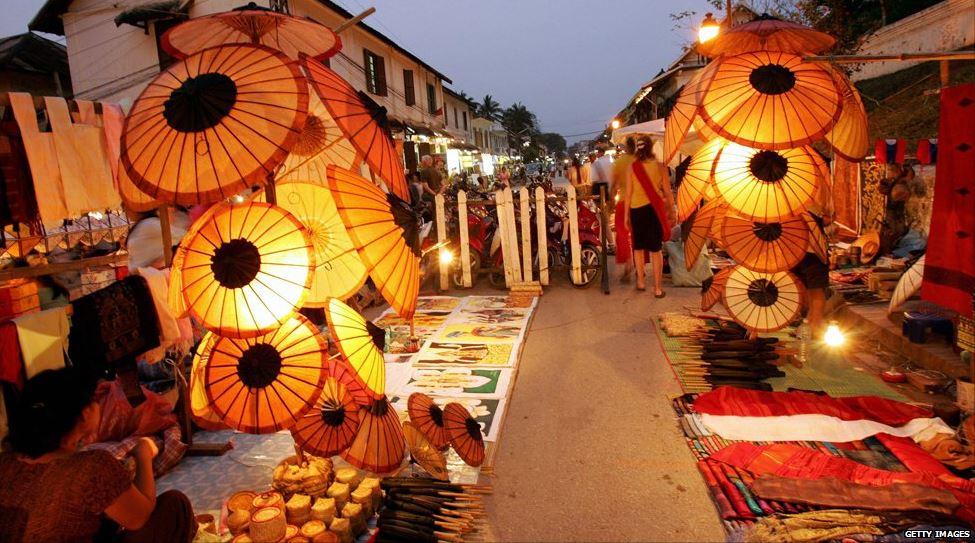
In Luang Prabang, every day, from 5 to 10pm, the Night Market is set up on the main street. Do not hesitate to go for a walk between the different stands, where you can find a lot of souvenirs. Be aware nevertheless, some items are unfortunately not Lao productions. To know our best places to buy souvenirs made in Lao, keep reading.

5 - The Wats

Luang Prabang is the city of temples. Listed in 1995 as a World Heritage Site by the UNESCO, it remains a symbol of Buddhism in Asia. One can count more than sixty temples. Among those recommended by our local agent is the XiengThong Temple, the most beautiful temple of the Royal City that has a vast set of sacred buildings. It is one of the jewels of the Lao art. Discover it with one of our local guides with whom you can learn more about the history of this magnificent temple and the Buddhist religion.

6 - T.A.E.C museum

The Traditional Arts and Ethnies Center is a museum whose collection allows to discover the great diversity and cultural richness of the different ethnic groups living in Laos (Laos, Hmong, Tai, Khmu, Akha …) This museum is supported by the NGO in Australia and is funded solely by individual donations, entry fees and proposed activities. It supports local communities by developing with the women of different ethnic groups products from traditional crafts, weaving, embroidery and small decorative objects of quality.

7 - OckPopTok

Ock Pop Tok, which can be translated from Lao by, East meets West, is a social and solidarity company where you can participate in workshops to learn how to weave and to see the hard work of weavers . The Living Crafts Center has a weaving and dyeing room, a school and an exhibition space. Sharing, learning and culture are the hallmarks of any move to Ock Pop Tok. A quick tour through the shop for the purchase of souvenirs made by hand and Lao

8 - Tak-Bat

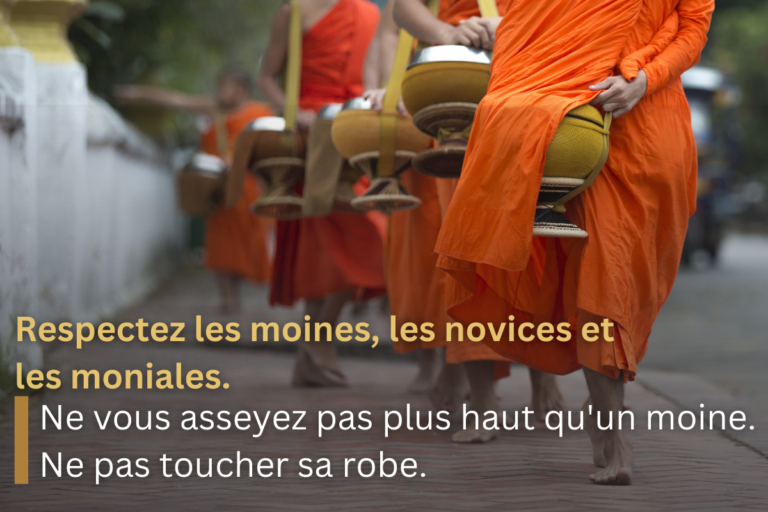
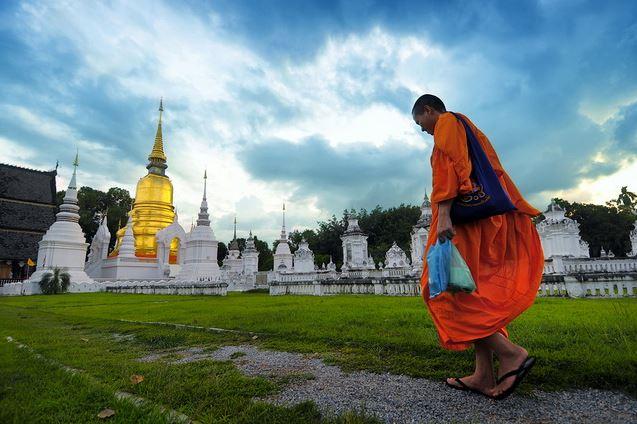
It is almost obvious, the orange color predominates in Luang Prabang. Indeed, the city is part of an obligatory passage in the life of a monk. It is in a spiritual silence that you can attend the ceremony of Tak Bat,a parade of saffron dressed bonzes in the streets of the city, which takes place at sunrise (around 6:30). The monks come from the many temples of Luang Prabang in long silent processions, seeking food and offerings to the faithful. This ritual is unfortunately very often disturbed by the tourists. Respect them, and refrain from disturbing their walk. Finally, it is better not to buy rice prepared by merchants who see the opportunity to earn some money, (it is a ritual that does not concern Westerners).

9 - Phad Tad Ke Botanical Garden

The botanical garden of Luang Prabang is undoubtedly a place full of poetry and tranquility. You will have to cross the Mekong for about ten minutes to reach it. This garden aims to discover all the endemic plants and flowers of Laos through various fun and educational courses suitable for children and adults in a natural setting and full of magic.

10 - Nahm Dong Park

To finish this top 10, we also propose to accompany our customers not far from Luang Prabang, at Nahm Dong Park. Based on eco-tourism, the park is a paradise for lovers of outdoor activities and allows a return to nature. Between the waterfalls, the forest, an organic farm, a small zoo, a mint farm or activities such as trekking or Zip line, the park certainly has something to please everyone, children and adults alike. In addition, it is important to note that the profits generated by the park’s activities are partly donated to the neighboring village to help the poorest people, or the disabled.

Archive Blog Detail

Southern Laos, charming by nature

Discover through this video the charms of the Champassak region in the South of Laos which offers a wide range of exciting experiences: ancient temples and traditional craftsmen for culture, waterfalls and bolaven plateau for nature, zip lines and kayaks for adventure, the peaceful cities of Pakse and Champassak to enjoy fine Lao cuisine and finally the 4,000 islands to relax.

1- WAT PHOU – CHAMPASSAK


Champassak, formerly named Bassac and former capital of the province of Champassak is a small town located in the extreme south of Laos nestled on the western bank of the Mekong. When the Khmer empire ruled the country, by the sacred mountain of Phu Kao was built the famous temple of Wat Phou (meaning « Temple of the mountain » in Lao). Since 2001, the entire Wat Phou site (about 84 hectares) is classified as a UNESCO world heritage site and is considered the most important archaeological site in Laos.

After the Khmer occupation, the Wat Phou site became a sacred Buddhist sanctuary throughout the country. Every year on the 15th day of the growing moon of the 3rd month is celebrated the Wat Phou Festival which coincides with the Buddhist festival of Makha Busa.


2- TRADITIONAL ARTISANS

Laos is a country where local and traditional crafts still remain today, and the south of the country is not an exception! During your stay in southern Laos, take time to explore villages of different ethnic groups where you may discover weavers who use old wooden looms, some who are specialized in sculpture or pottery or even still working with bamboo which holds a central place in Laotian culture!


3- mekong – the mother of all river

The Mekong, the 10th largest river in the world measuring about 5000km, flows through 6 countries in Asia: China, Myanmar, Laos, Thailand, Cambodia and Vietnam. It crosses Laos from north to south but it is in the region of the 4.000 islands that it is the widest where in the rainy season it can reach up to 14km

The Mekong draws its name from the Tai ethnic group: originally « Mae Nam Khong » shortened to « Mae Khong » meaning « The mother of all rivers ».

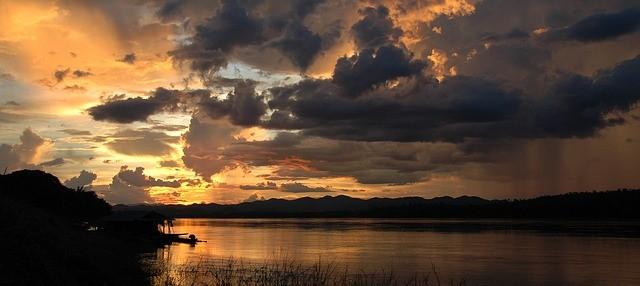
During your stay in this region, enjoy a cruise on the Mekong River aboard a small traditional wooden boat or for the more adventurous, kayaking is also possible. But above all do not miss the beauty of a sunset on this emblematic river!

4- 4.000 islands

 At the southern end of the country, forming the border with Cambodia is an archipelago composed of small islands lost in the heart of the Mekong, which reaches nearly 14 km wide during the rainy season. In the dry season, the major part of the Mekong waters withdraw and thousands of islands and islets appear, hence the name « Si Phan Don » in Lao: the 4,000 islands. The three main islands are: Don Det, Don Khon and Done Kong.

The 4,000 island region is a haven of peace and tranquility very much preserved. At the heart of this incredible nature, you can rent a bike to discover the region, kayak on the Mekong or explore beautiful waterfalls! But do not forget to admire the sunset on the Mekong from a bungalow or a hammock at the water’s edge. Here relaxation is the key word!


5- Khone Phapheng

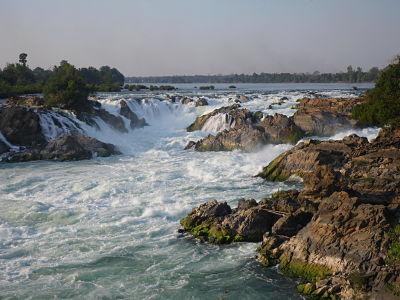
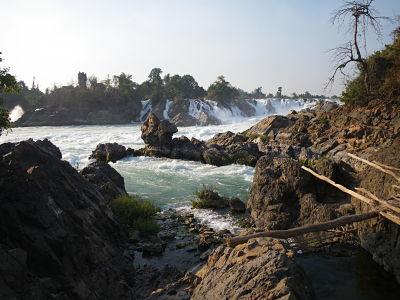
Khone Phapheng Falls, located on the Mekong River in the Champassak region, are about 21m high and extend over several rapids of about ten kilometres. Their flow, which can reach more than 49,000m3 per second during the rainy season, is one of the highest in the world. Nicknamed the Niagara Falls of Asia, Khone Phapheng is truly a wonder of nature, not to be missed during your stay in southern Laos.


6- Tad Fan

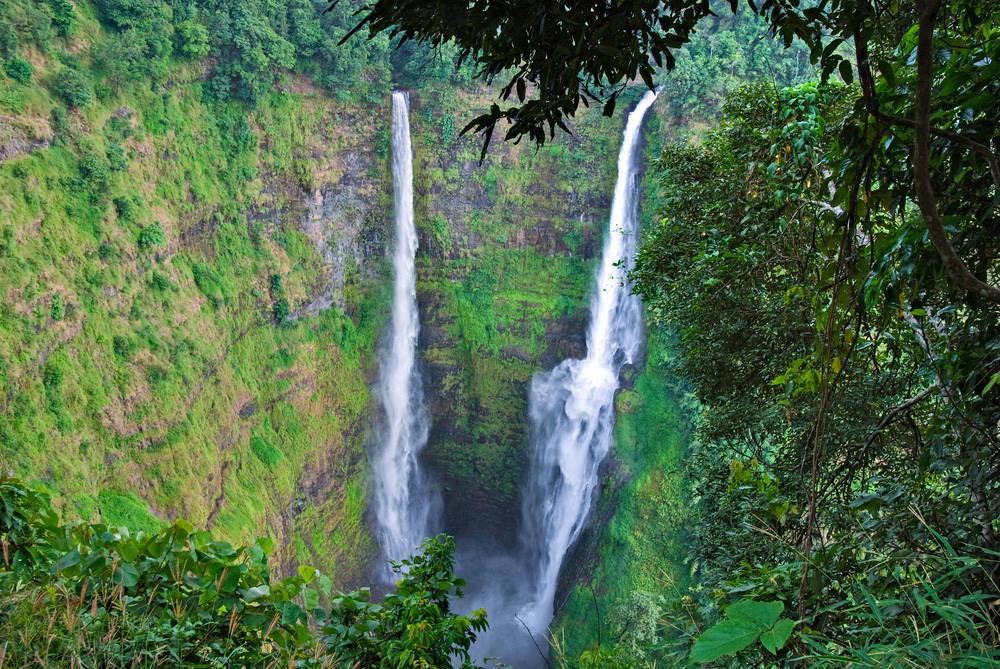
In the heart of an incredible jungle, the impressive twin waterfalls of Tad Fane flow more than 100 meters along steep cliffs before flowing into the gorges of the tropical forest of Dong Hua Sao National Park. Many treks are organized to reach Tad Fane often considered as one of the most beautiful waterfalls in Laos! You can also discover this green nature by kayak or zip line.

7- PaksÉ

Currently capital of Champassak province, it is the real hub of southern Laos with 70,000 inhabitants and its airport that serves the famous Bolaven plateau. Don’t miss out on visiting this region by motorcycle or jeep to get close to the many local tea and coffee plantations, lush nature and numerous waterfalls!

In the town of Pakse you can also stroll along the country’s largest local market (Dao Heuang morning market), visit sumptuous temples (Wat Luang) or the Champassak museum.

Archive Blog Detail

Festivals & Celebrations in South East Asia

Asian festivals are among the most exotic and spectacular in the world! The month of November in South East Asia coincides with the end of the rainy season, the harvest period, the beginning of the dry season, which involves a number of celebrations and when it comes to honouring the spirits, Asians do not skimp on the means! On the program: illuminations, parades, traditional dance demonstrations, boat races, etc.
It’s worth synchronizing your trip to Asia with one of these celebrations! So if you have the chance to travel to South East Asia before the end of the year, here is a list of Festivities not to be missed!


Thailande – Loy Krathong /   CHIANG MAI – yee peng 

Venue : November 

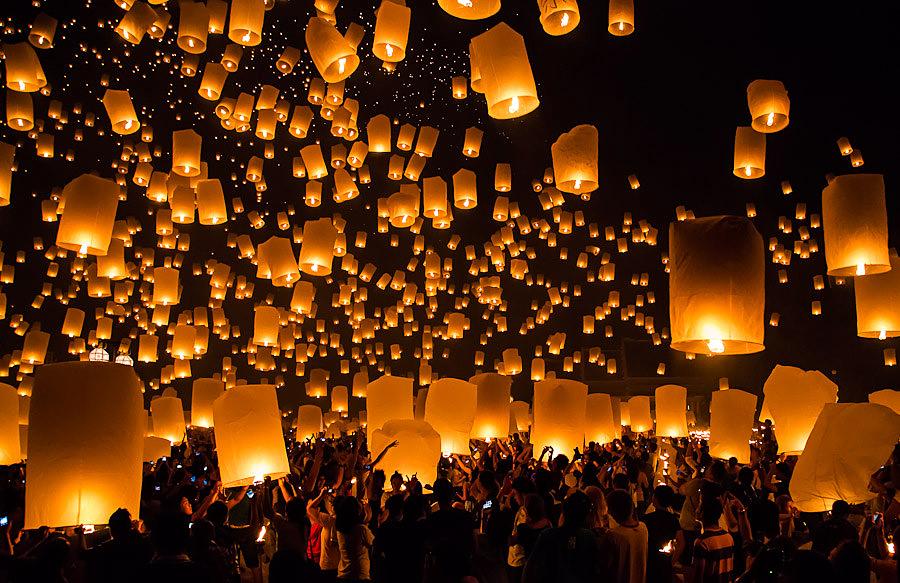
Every year in Thailand, Loy Kratong, also known as the Festival of Lights, is held where thousands of candlelit paper lanterns are released into the sky and onto the Ping River, one of the country’s most important cultural events. The festival takes place on the full moon of the 12th lunar month of the Thai calendar (usually in mid-November). The release of the lanterns symbolizes for the Thais the « letting go of all the bad spirits and misfortunes of the previous year ».
In Chiang Mai, the celebration of Loy Krathong is known as Yee Peng, again as part of the 12th month of the Thai lunar calendar, the 2nd month of the traditional calendar of the Lanna ancient kingdom.
Generally speaking, the festival is celebrated throughout the country for 2 days, in Chiang Mai, its duration can reach up tp one week during which many presentations and events take place, including parades, fireworks, sound and light shows, the Lanna style decoration contest, but the most awaited of all is the famous beauty contest bringing together, all in one a parade, the most beautiful women of Chiang Mai province.

To celebrate the Festival of Lights, people from northern Thailand often use 4 different types of lanterns, which are called Khom. They are made from paper, inside which is placed a candle to illuminate the whole.
Khom Theua: is a small lantern that people wear during the parade. Later, it will be used to decorate temples.
Khom Kwaen: is a small lantern that is hung from temples as an offering to Buddha. They can take 4 forms depending on the context: the alms bowl, a star, a wheel and a basket
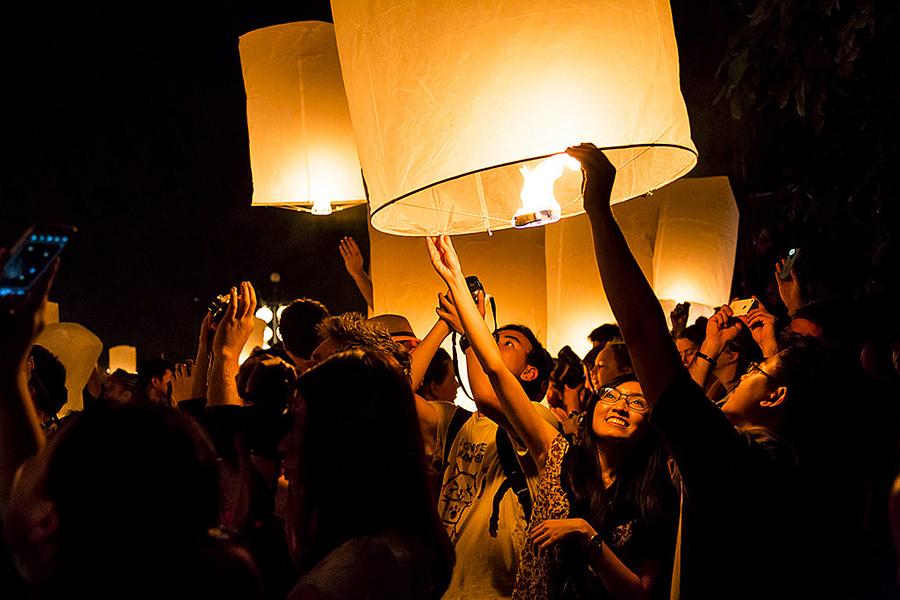
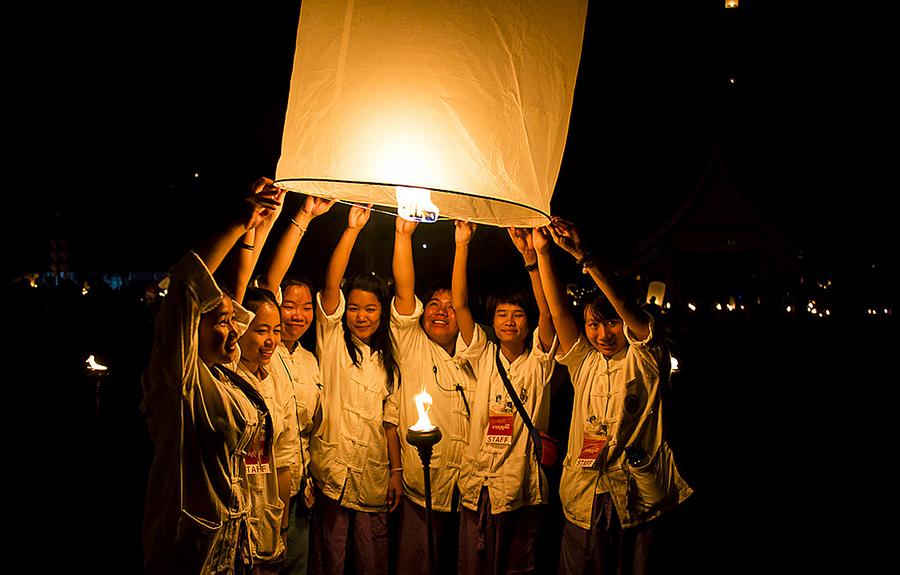
Khom Loy: Also known as Khom Fai, it is a cylindrical paper measuring 1m high, inside of which are placed some firecrackers and explosives that are supposed to explode once the balloon is thrown into the air. The launch of the Khom Loy in Chiang Mai is an exceptional event. During that time, the sky is covered with a mass of illuminated balloons whose reflection on the water provides a dazzling spectacle. It’s an emotionally rich experience that’s really worth a visit!
Khratong: (or floating light) It is made from banana leaves whose shape is closely related to that of the lotus. The Khratong contains a lit candle, some flowers to decorate and incense to perfume it. The inhabitants drop these small boats off along rivers and other water points, not only to thank the water goddess (this festival marks the end of the rainy season) but also to atone for the mistakes made throughout the year.

laos - boun ok phansa / boun lai heua fai

Venue: November

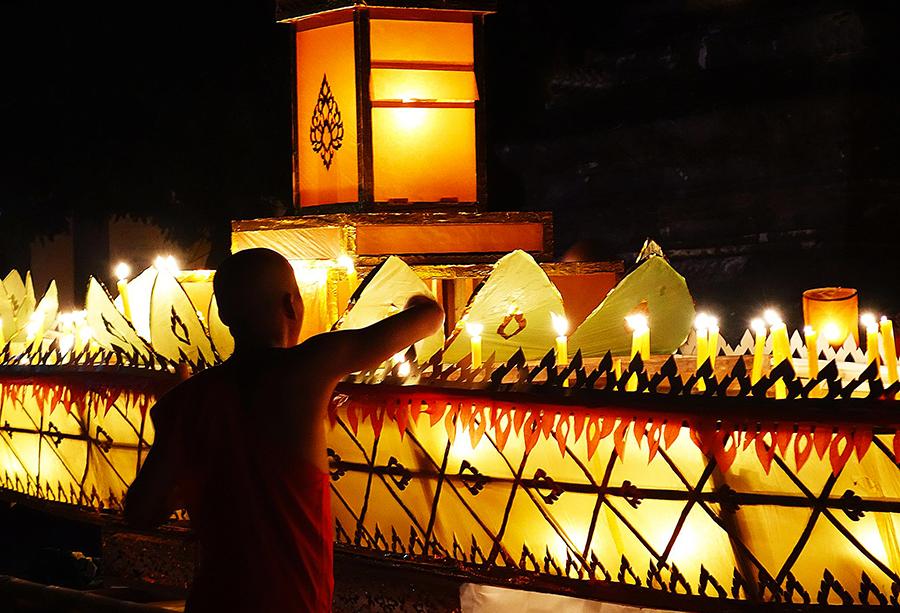
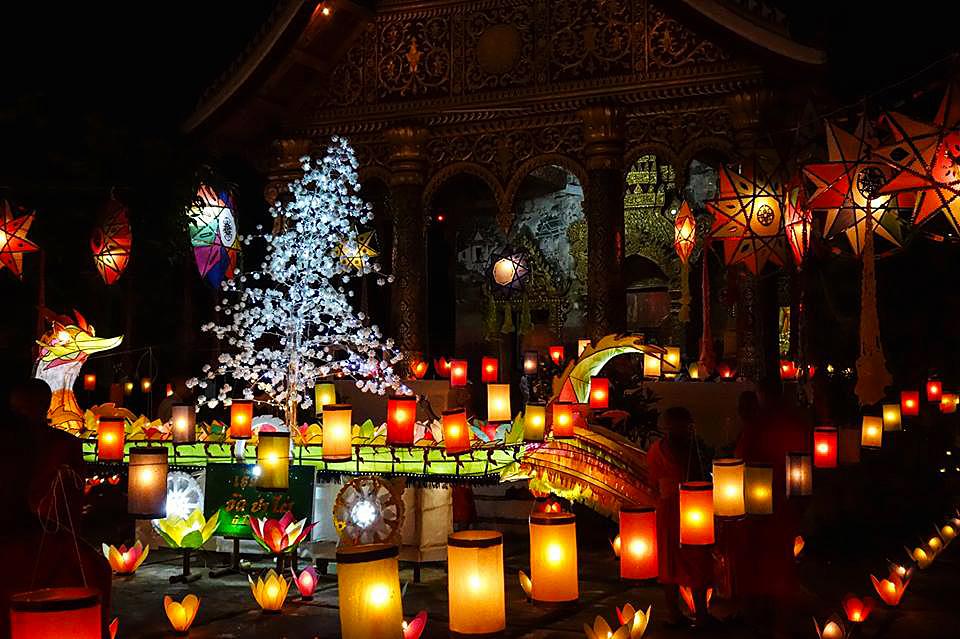
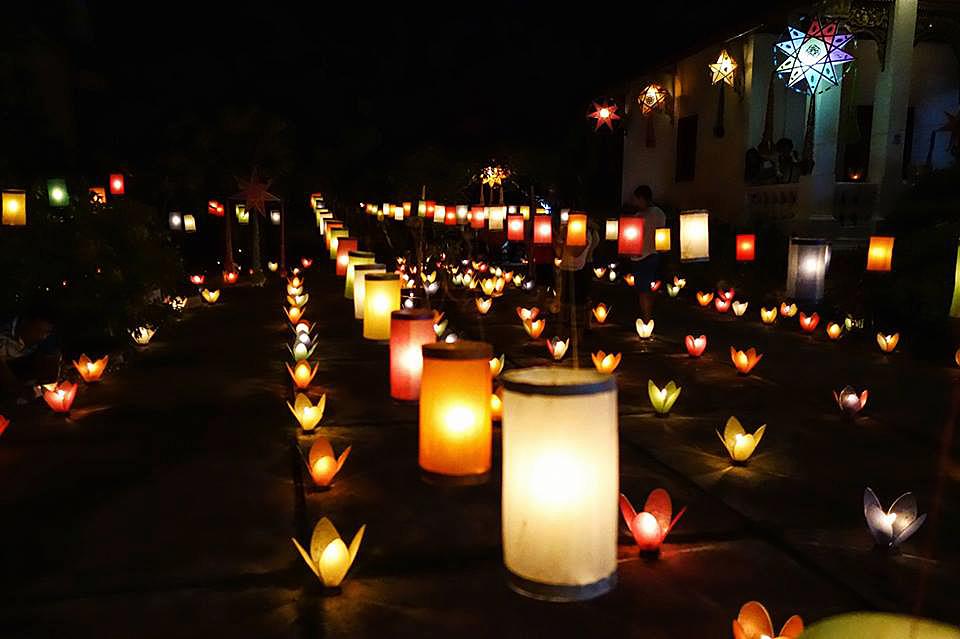
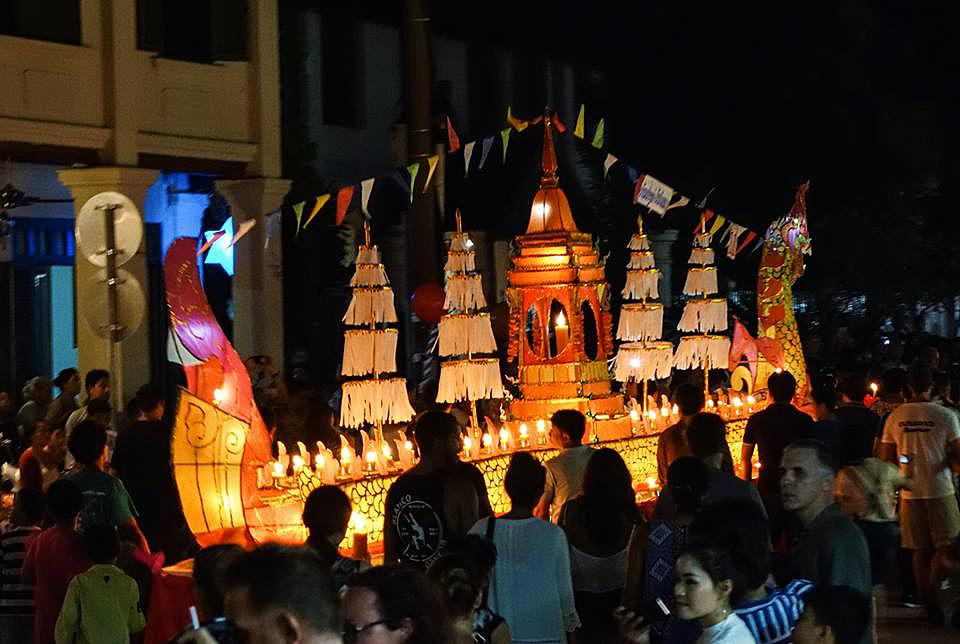
In Laos, Boun Ok Phansa is the holy day marking the end of Buddhist Lent and the end of the rainy season; the next day is Boun Lai Heua Fai: the festival of boat lanterns (taking place the next day) which pays tribute to the Mekong and the dead, it is one of the most important celebrations in the country ! Traditionally, Boun Ok Phansa is an opportunity to honour the spirits of the Mekong. We think that disease, bad luck and all that is negative can be carried away by the river. In the weeks before this festival, novices and monks decorate the temples with paper lanterns and villages make their boat lanterns out of bamboo and paper. The temples are all nicely lit, so that everyone walks from temple to temple at night. On the big day, the lanterns of the big boats are lit and are marched along the main street to Wat Xieng thong where they descend into the Mekong. People buy or make lanterns from banana tree trunks and flowers, light them, make a wish and put them in the river. The whole river seems to be lighting up, it’s a spectacular night. 

cambodia – water festival / boat race

Venue: November

Bon Om Touk, also known as the « Water Festival », is an annual Cambodian celebration that takes place mainly in Phnom Penh, the capital of Cambodia, but also in Angkor. Bon Om Touk is a celebration of the end of the rainy season at the full moon of the Buddhist month of Kadeuk. The full moon is considered a good luck charm that can lead to an abundant harvest. On the Western calendar, Bon Om Touk falls in October or early November.
Heavy monsoon rains cause the Mekong River to reverse its course and push back into the very large Tonle Sap Lake, far upstream. The lake therefore overflows its normal limits, which provides a lot of water for the main event in Bon Om Touk, the annual pirogue race. Once the Mekong River and the Tonle Sap River, which connects the Mekong River to Tonle Sap Lake, begin to flow back to the sea, you know it is almost time for Bon Om Touk. The withdrawal of the water also leaves rich sediments that will help local farmers in the upcoming year. However, be aware that in years of low water, the annual boat race can be cancelled.
For three consecutive days, the celebrations continue, with people from all over Cambodia coming to Phnom Penh to take part in the festivities. Day and night, the celebration continues. Activities include music concerts, traditional dance demonstrations and Aboriginal food feasts. The regatta often includes up to 400 racing boats, each decorated with bright colours and rowed by about forty men, who are usually monks. There are prizes for the winners, and dancers and drummers on board that keep the rowers in the right rhythm.

myanmar - hot air balloon festival - taungyi

Venue: 17-22 November 2018

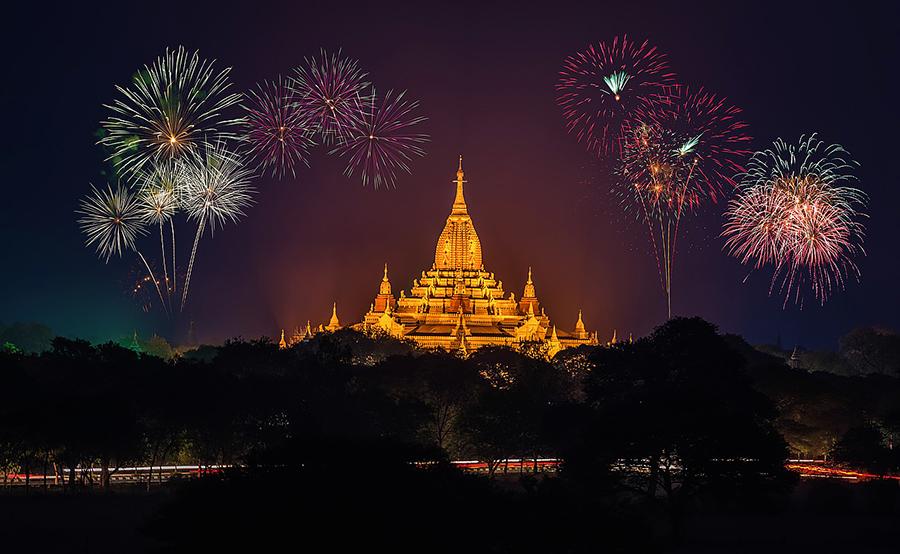
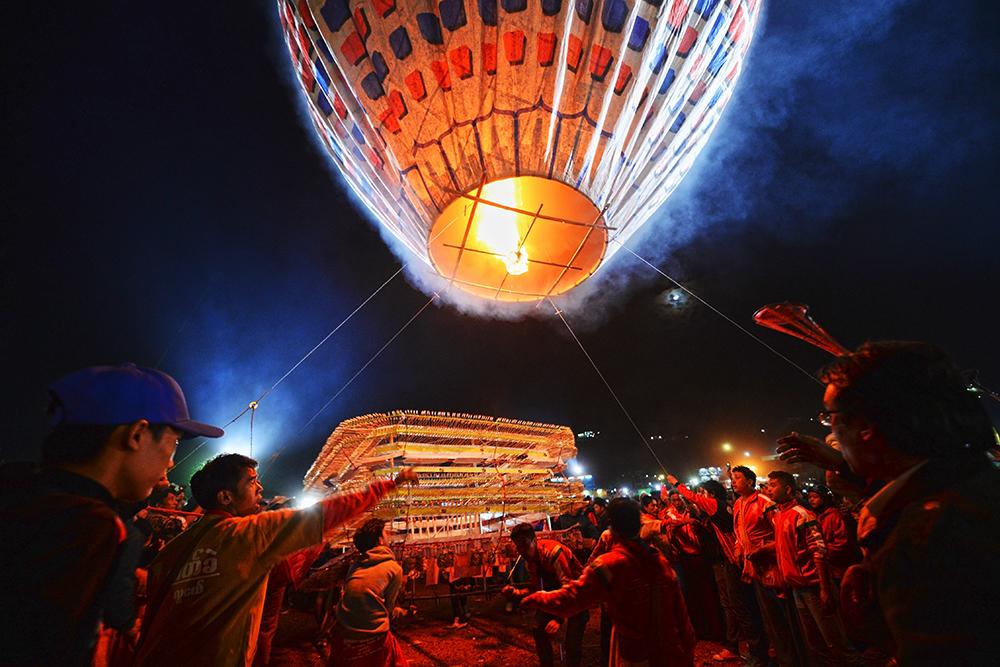
The festival takes place every year, during the full moon of November, this year, from 17th to 22nd November in Taunggyi, capital of Shan State. This is an important month that marks the end of the rainy season and the beginning of winter. The « Hot Air Balloon » festival is one of Burma’s most popular events, each year balloons are sent to the sky as a sign of offering to the good spirits and as a tribute to the Sulamani Pagoda.
The Tazaungdaing festival takes place over a week: 5 days of qualifying and two days of finals. It ends on the day of the full moon in November. The teams, representing the different districts of Taunggyi, are preparing for a year of competition. The objective is to successfully fly the most elaborate and decorated balloon. Hot air balloons are made of paper, by hand. They are decorated with fireworks, firecrackers and candles. Every evening, music and parades accompany the placement of the balloons on the central lawn.

vietnam - Ooc Om bok

Venue: November 

Ooc Om Bok is one of the liveliest festivals in the Khmer calendar. The Vietnamese of the Mekong Delta take this opportunity to thank the god of the moon for the good rice harvests and abundant fish catches, and to celebrate the end of the Khmer year. Fruits and vegetables are offered as an offering to the gods at midnight. Thousands of visitors gather to attend boat races, and ethnic dance and music are guaranteed. It is also an opportunity to celebrate the end of the rainy season and the beginning of the dry season.
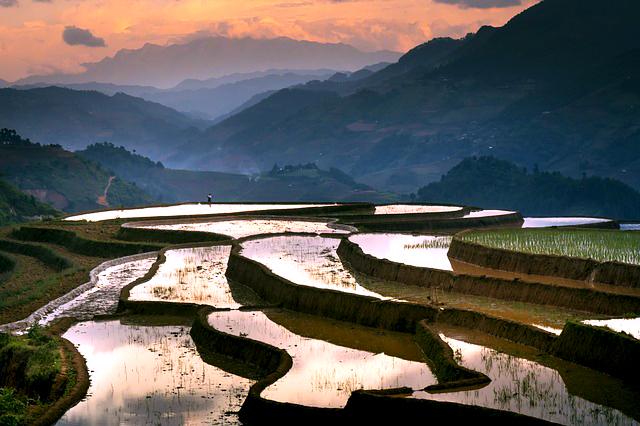
The harvest period is very important and this is one of the main reasons for the celebration. If you travel to Vietnam, the harvest period is extremely interesting. The rice fields that were flooded when the rice was planted are now dry and the golden rice gives the rice fields a completely different appearance.

Archive Blog Detail

Festivals & Celebrations in South East Asia

Asian festivals are among the most exotic and spectacular in the world! The month of November in South East Asia coincides with the end of the rainy season, the harvest period, the beginning of the dry season, which involves a number of celebrations and when it comes to honouring the spirits, Asians do not skimp on the means! On the program: illuminations, parades, traditional dance demonstrations, boat races, etc.
It’s worth synchronizing your trip to Asia with one of these celebrations! So if you have the chance to travel to South East Asia before the end of the year, here is a list of Festivities not to be missed!


Thailande – Loy Krathong /   CHIANG MAI – yee peng 

Venue : November 

Every year in Thailand, Loy Kratong, also known as the Festival of Lights, is held where thousands of candlelit paper lanterns are released into the sky and onto the Ping River, one of the country’s most important cultural events. The festival takes place on the full moon of the 12th lunar month of the Thai calendar (usually in mid-November). The release of the lanterns symbolizes for the Thais the « letting go of all the bad spirits and misfortunes of the previous year ».
In Chiang Mai, the celebration of Loy Krathong is known as Yee Peng, again as part of the 12th month of the Thai lunar calendar, the 2nd month of the traditional calendar of the Lanna ancient kingdom.
Generally speaking, the festival is celebrated throughout the country for 2 days, in Chiang Mai, its duration can reach up tp one week during which many presentations and events take place, including parades, fireworks, sound and light shows, the Lanna style decoration contest, but the most awaited of all is the famous beauty contest bringing together, all in one a parade, the most beautiful women of Chiang Mai province.

To celebrate the Festival of Lights, people from northern Thailand often use 4 different types of lanterns, which are called Khom. They are made from paper, inside which is placed a candle to illuminate the whole.
Khom Theua: is a small lantern that people wear during the parade. Later, it will be used to decorate temples.
Khom Kwaen: is a small lantern that is hung from temples as an offering to Buddha. They can take 4 forms depending on the context: the alms bowl, a star, a wheel and a basket
Khom Loy: Also known as Khom Fai, it is a cylindrical paper measuring 1m high, inside of which are placed some firecrackers and explosives that are supposed to explode once the balloon is thrown into the air. The launch of the Khom Loy in Chiang Mai is an exceptional event. During that time, the sky is covered with a mass of illuminated balloons whose reflection on the water provides a dazzling spectacle. It’s an emotionally rich experience that’s really worth a visit!
Khratong: (or floating light) It is made from banana leaves whose shape is closely related to that of the lotus. The Khratong contains a lit candle, some flowers to decorate and incense to perfume it. The inhabitants drop these small boats off along rivers and other water points, not only to thank the water goddess (this festival marks the end of the rainy season) but also to atone for the mistakes made throughout the year.

laos - boun ok phansa / boun lai heua fai

Venue: November

In Laos, Boun Ok Phansa is the holy day marking the end of Buddhist Lent and the end of the rainy season; the next day is Boun Lai Heua Fai: the festival of boat lanterns (taking place the next day) which pays tribute to the Mekong and the dead, it is one of the most important celebrations in the country ! Traditionally, Boun Ok Phansa is an opportunity to honour the spirits of the Mekong. We think that disease, bad luck and all that is negative can be carried away by the river. In the weeks before this festival, novices and monks decorate the temples with paper lanterns and villages make their boat lanterns out of bamboo and paper. The temples are all nicely lit, so that everyone walks from temple to temple at night. On the big day, the lanterns of the big boats are lit and are marched along the main street to Wat Xieng thong where they descend into the Mekong. People buy or make lanterns from banana tree trunks and flowers, light them, make a wish and put them in the river. The whole river seems to be lighting up, it’s a spectacular night. 

cambodia – water festival / boat race

Venue: November

Bon Om Touk, also known as the « Water Festival », is an annual Cambodian celebration that takes place mainly in Phnom Penh, the capital of Cambodia, but also in Angkor. Bon Om Touk is a celebration of the end of the rainy season at the full moon of the Buddhist month of Kadeuk. The full moon is considered a good luck charm that can lead to an abundant harvest. On the Western calendar, Bon Om Touk falls in October or early November.
Heavy monsoon rains cause the Mekong River to reverse its course and push back into the very large Tonle Sap Lake, far upstream. The lake therefore overflows its normal limits, which provides a lot of water for the main event in Bon Om Touk, the annual pirogue race. Once the Mekong River and the Tonle Sap River, which connects the Mekong River to Tonle Sap Lake, begin to flow back to the sea, you know it is almost time for Bon Om Touk. The withdrawal of the water also leaves rich sediments that will help local farmers in the upcoming year. However, be aware that in years of low water, the annual boat race can be cancelled.
For three consecutive days, the celebrations continue, with people from all over Cambodia coming to Phnom Penh to take part in the festivities. Day and night, the celebration continues. Activities include music concerts, traditional dance demonstrations and Aboriginal food feasts. The regatta often includes up to 400 racing boats, each decorated with bright colours and rowed by about forty men, who are usually monks. There are prizes for the winners, and dancers and drummers on board that keep the rowers in the right rhythm.

myanmar - hot air balloon festival - taungyi

Venue: 17-22 November 2018

The festival takes place every year, during the full moon of November, this year, from 17th to 22nd November in Taunggyi, capital of Shan State. This is an important month that marks the end of the rainy season and the beginning of winter. The « Hot Air Balloon » festival is one of Burma’s most popular events, each year balloons are sent to the sky as a sign of offering to the good spirits and as a tribute to the Sulamani Pagoda.
The Tazaungdaing festival takes place over a week: 5 days of qualifying and two days of finals. It ends on the day of the full moon in November. The teams, representing the different districts of Taunggyi, are preparing for a year of competition. The objective is to successfully fly the most elaborate and decorated balloon. Hot air balloons are made of paper, by hand. They are decorated with fireworks, firecrackers and candles. Every evening, music and parades accompany the placement of the balloons on the central lawn.

vietnam - Ooc Om bok

Venue: November 

Ooc Om Bok is one of the liveliest festivals in the Khmer calendar. The Vietnamese of the Mekong Delta take this opportunity to thank the god of the moon for the good rice harvests and abundant fish catches, and to celebrate the end of the Khmer year. Fruits and vegetables are offered as an offering to the gods at midnight. Thousands of visitors gather to attend boat races, and ethnic dance and music are guaranteed. It is also an opportunity to celebrate the end of the rainy season and the beginning of the dry season.
The harvest period is very important and this is one of the main reasons for the celebration. If you travel to Vietnam, the harvest period is extremely interesting. The rice fields that were flooded when the rice was planted are now dry and the golden rice gives the rice fields a completely different appearance.

Archive Blog Detail

Southern Laos, charming by nature

Discover through this video the charms of the Champassak region in the South of Laos which offers a wide range of exciting experiences: ancient temples and traditional craftsmen for culture, waterfalls and bolaven plateau for nature, zip lines and kayaks for adventure, the peaceful cities of Pakse and Champassak to enjoy fine Lao cuisine and finally the 4,000 islands to relax.

1- WAT PHOU – CHAMPASSAK


Champassak, formerly named Bassac and former capital of the province of Champassak is a small town located in the extreme south of Laos nestled on the western bank of the Mekong. When the Khmer empire ruled the country, by the sacred mountain of Phu Kao was built the famous temple of Wat Phou (meaning « Temple of the mountain » in Lao). Since 2001, the entire Wat Phou site (about 84 hectares) is classified as a UNESCO world heritage site and is considered the most important archaeological site in Laos.

After the Khmer occupation, the Wat Phou site became a sacred Buddhist sanctuary throughout the country. Every year on the 15th day of the growing moon of the 3rd month is celebrated the Wat Phou Festival which coincides with the Buddhist festival of Makha Busa.


2- TRADITIONAL ARTISANS

Laos is a country where local and traditional crafts still remain today, and the south of the country is not an exception! During your stay in southern Laos, take time to explore villages of different ethnic groups where you may discover weavers who use old wooden looms, some who are specialized in sculpture or pottery or even still working with bamboo which holds a central place in Laotian culture!


3- mekong – the mother of all river

The Mekong, the 10th largest river in the world measuring about 5000km, flows through 6 countries in Asia: China, Myanmar, Laos, Thailand, Cambodia and Vietnam. It crosses Laos from north to south but it is in the region of the 4.000 islands that it is the widest where in the rainy season it can reach up to 14km

The Mekong draws its name from the Tai ethnic group: originally « Mae Nam Khong » shortened to « Mae Khong » meaning « The mother of all rivers ».

During your stay in this region, enjoy a cruise on the Mekong River aboard a small traditional wooden boat or for the more adventurous, kayaking is also possible. But above all do not miss the beauty of a sunset on this emblematic river!

4- 4.000 islands

 At the southern end of the country, forming the border with Cambodia is an archipelago composed of small islands lost in the heart of the Mekong, which reaches nearly 14 km wide during the rainy season. In the dry season, the major part of the Mekong waters withdraw and thousands of islands and islets appear, hence the name « Si Phan Don » in Lao: the 4,000 islands. The three main islands are: Don Det, Don Khon and Done Kong.

The 4,000 island region is a haven of peace and tranquility very much preserved. At the heart of this incredible nature, you can rent a bike to discover the region, kayak on the Mekong or explore beautiful waterfalls! But do not forget to admire the sunset on the Mekong from a bungalow or a hammock at the water’s edge. Here relaxation is the key word!


5- Khone Phapheng

Khone Phapheng Falls, located on the Mekong River in the Champassak region, are about 21m high and extend over several rapids of about ten kilometres. Their flow, which can reach more than 49,000m3 per second during the rainy season, is one of the highest in the world. Nicknamed the Niagara Falls of Asia, Khone Phapheng is truly a wonder of nature, not to be missed during your stay in southern Laos.


6- Tad Fan

In the heart of an incredible jungle, the impressive twin waterfalls of Tad Fane flow more than 100 meters along steep cliffs before flowing into the gorges of the tropical forest of Dong Hua Sao National Park. Many treks are organized to reach Tad Fane often considered as one of the most beautiful waterfalls in Laos! You can also discover this green nature by kayak or zip line.

7- PaksÉ

Currently capital of Champassak province, it is the real hub of southern Laos with 70,000 inhabitants and its airport that serves the famous Bolaven plateau. Don’t miss out on visiting this region by motorcycle or jeep to get close to the many local tea and coffee plantations, lush nature and numerous waterfalls!

In the town of Pakse you can also stroll along the country’s largest local market (Dao Heuang morning market), visit sumptuous temples (Wat Luang) or the Champassak museum.

Archive Blog Detail

The 10 Unmissables of Luang Prabang – Laos
Preparing a trip is first and foremost about the activities offered by the destination you are looking for.

At AsiaMyWay, your local Southeast Asian specialist for more than 20 years, we have thought of you. Our local agent Caroline, gives you her top activities to do and places you can not miss on your next visit to the former capital of the Land of the Million Elephants. A city full of resources where everyone can easily find their little piece of paradise. To help you during your next stop in this charming city, we present today the ranking of the 10 discoveries to be made in Luang Prabang.

1 - Kuang Sy

If there is a place you can not miss when you visit the former capital of the Kingdom, this is it. Nestled in the forest a few kilometers from Luang Prabang, the falls of Kuang Sy are a real enchanting site. The waters flowing in several pools of turquoise water cascading in the middle of the vegetation offers breathtaking shades of blue and green . These turquoise waters encourage swimming in the respect of Lao manners.

2 - Living Land Farm

One of the most recommended places by our local agent. This farm located just 30 minutes drive from Luang Prabang will allow you to discover and participate in all stages of rice cultivation: from planting to harvesting to your plate.

Living Land is a community tourism project led by the dynamic Mr. Launt – Through this activity, Living Land advocates for a reasoned rice cultivation without the use of pesticides and finances English classes and tutoring for 7 pupils from neighboring villages selected at the beginning of the year by the teachers according to their merit and all from families in difficulty.

3 - Phousi mountain

This sacred hill located in the city center is accessible by a long winding staircase in the middle of many pagodas filled with legends. After climbing the summit, you will be rewarded with a magnificent panoramic view of the city and its rivers. We suggest to our customers to go there for the sunset to admire a setting all the more soothing.

4 - The night market

In Luang Prabang, every day, from 5 to 10pm, the Night Market is set up on the main street. Do not hesitate to go for a walk between the different stands, where you can find a lot of souvenirs. Be aware nevertheless, some items are unfortunately not Lao productions. To know our best places to buy souvenirs made in Lao, keep reading.

5 - The Wats

Luang Prabang is the city of temples. Listed in 1995 as a World Heritage Site by the UNESCO, it remains a symbol of Buddhism in Asia. One can count more than sixty temples. Among those recommended by our local agent is the XiengThong Temple, the most beautiful temple of the Royal City that has a vast set of sacred buildings. It is one of the jewels of the Lao art. Discover it with one of our local guides with whom you can learn more about the history of this magnificent temple and the Buddhist religion.

6 - T.A.E.C museum

The Traditional Arts and Ethnies Center is a museum whose collection allows to discover the great diversity and cultural richness of the different ethnic groups living in Laos (Laos, Hmong, Tai, Khmu, Akha …) This museum is supported by the NGO in Australia and is funded solely by individual donations, entry fees and proposed activities. It supports local communities by developing with the women of different ethnic groups products from traditional crafts, weaving, embroidery and small decorative objects of quality.

7 - OckPopTok

Ock Pop Tok, which can be translated from Lao by, East meets West, is a social and solidarity company where you can participate in workshops to learn how to weave and to see the hard work of weavers . The Living Crafts Center has a weaving and dyeing room, a school and an exhibition space. Sharing, learning and culture are the hallmarks of any move to Ock Pop Tok. A quick tour through the shop for the purchase of souvenirs made by hand and Lao

8 - Tak-Bat

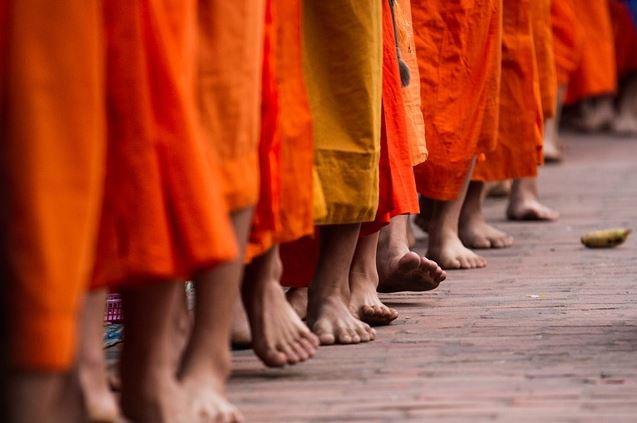
It is almost obvious, the orange color predominates in Luang Prabang. Indeed, the city is part of an obligatory passage in the life of a monk. It is in a spiritual silence that you can attend the ceremony of Tak Bat,a parade of saffron dressed bonzes in the streets of the city, which takes place at sunrise (around 6:30). The monks come from the many temples of Luang Prabang in long silent processions, seeking food and offerings to the faithful. This ritual is unfortunately very often disturbed by the tourists. Respect them, and refrain from disturbing their walk. Finally, it is better not to buy rice prepared by merchants who see the opportunity to earn some money, (it is a ritual that does not concern Westerners).

9 - Phad Tad Ke Botanical Garden

The botanical garden of Luang Prabang is undoubtedly a place full of poetry and tranquility. You will have to cross the Mekong for about ten minutes to reach it. This garden aims to discover all the endemic plants and flowers of Laos through various fun and educational courses suitable for children and adults in a natural setting and full of magic.

10 - Nahm Dong Park

To finish this top 10, we also propose to accompany our customers not far from Luang Prabang, at Nahm Dong Park. Based on eco-tourism, the park is a paradise for lovers of outdoor activities and allows a return to nature. Between the waterfalls, the forest, an organic farm, a small zoo, a mint farm or activities such as trekking or Zip line, the park certainly has something to please everyone, children and adults alike. In addition, it is important to note that the profits generated by the park’s activities are partly donated to the neighboring village to help the poorest people, or the disabled.