VOYAGES A LA CARTE
NOS VALEURS

Archive Blog Detail

LA COLLINE OUBLIÉE – CAMBODGE

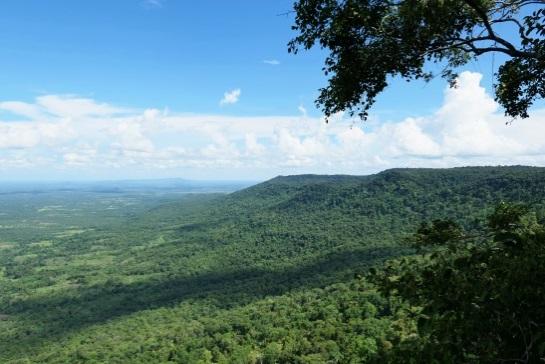
Les dernières collines de falaises karstiques encore recouvertes de forêts profondes ont des secrets que seuls les bûcherons et autres chasseurs de la région connaissent. C’est un voyage magnifique à ne pas manquer lors de votre voyage au Cambodge.
Quittez les rizières et traversez les rivières avant de vous engager profondément sur une piste forestière à travers la jungle. La route devient ici plus étroite et plus raide. Ce chemin principalement utilisé par les pèlerins est partiellement équipé d’échelles en bois et de rampes en bambou, dont la fiabilité peut être quelque peu mise en doute.

De courtes pauses au cours de l’ascension vous donneront la possibilité d’apprécier pas à pas les paysages et la vue sur la campagne environnante.

A quelques mètres du plateau, le premier arrêt est consacré à une grotte qui protège les esprits qui s’y réfugient et où subsistent les vestiges d’un ermitage. La grotte est située non loin d’une source d’eau fraîche qui est plus que bienvenue après une marche matinale intensive.

Après le déjeuner, la randonnée se poursuivra sur le plateau pour atteindre la pagode située au sommet d’une autre montagne. La falaise rocheuse devant la pagode offre une vue sur la campagne, les collines couvertes de forêts et les singes bruyants en contrebas.

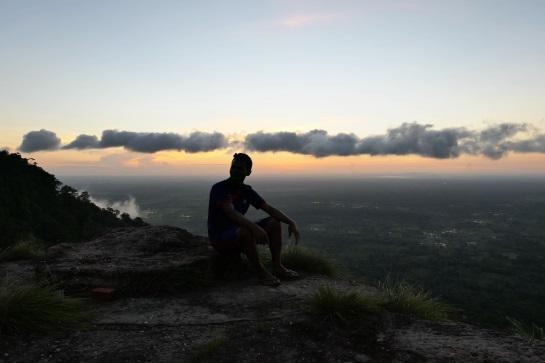
Si vous choisissez de passer la nuit chez les sympathiques habitants, vous pourrez déguster un délicieux repas préparé par les vieilles femmes du village, et le lendemain matin, vous vous réveillerez tôt avant le lever du soleil pour profiter au maximum du spectacle époustouflant qui s’offre à vos yeux depuis le bord de la falaise. Un moment magique avant de vous préparer pour votre voyage de retour.

Archive Blog Detail

The Forgotten Hill- Cambodia
Sokleap, our Cambodian Expert, shares the story of one of her scouting trips to Cambodia. Discover her adventures, her encounters, her discoveries. Get to know Cambodia differently and discover the most remote corners of the country.


The last karstic cliff hills still covered by deep forests have secrets that only woodsmen and other hunters of the region know of.


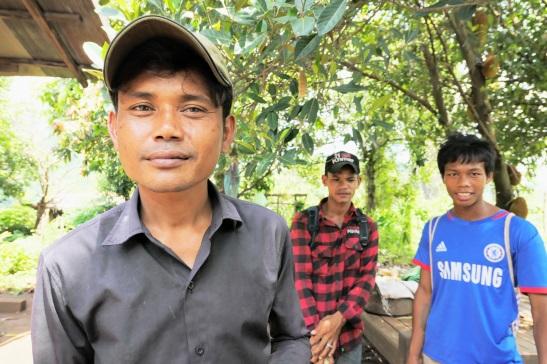
Asia My Way team was merely guided by a friendly team of young Cambodians that are usually more accustomed in carrying bags of cement and other building materials to the top of the hills than to accompany some strayed over-equipped tourists.

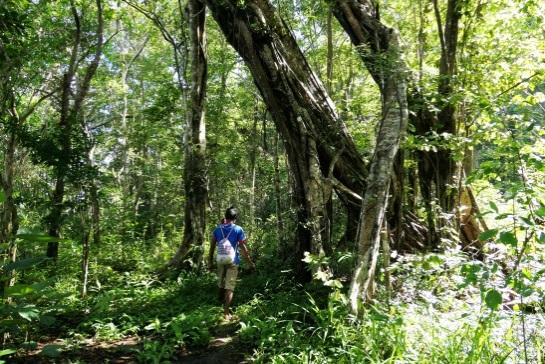
The team left the rice fields and crossed rivers before heading deeply onto a forest trail through the jungle. The road was becoming narrower and steeper. 

This path mostly used by pilgrims is partially equipped with wooden ladders and bamboo railings, whose reliability can be somewhat put into doubt.  

Short breaks during the climb gave the possibility to appreciate step by step the landscapes and the view of the surrounding countryside. The local guides showed the roof of their houses which could be observed from afar.

A few meters away from the plateau, the first stop was dedicated to a cave that protects the spirits that take refuge under it and where the remains of a hermitage subsist. The cave is located not far from a fresh water source which is more than welcome after an intensive morning walk.

After lunch the hiking continued on the plateau to reach the pagoda located at another mountain summit. We reach it by late afternoon, which is the ideal time to discover the site and meet its few inhabitants, including a monk to whom we ask hospitality for the night. This man who is fully silent welcomes us by offering us a cup of coffee. His clothes are torn and we take some time to understand that his gestures invite us to sit down and enjoy our hot drink. We explain why we are here and receive a big smile of consent. He finally speaks out to recite a prayer while we make an offering to him and then returns to his mutisme.

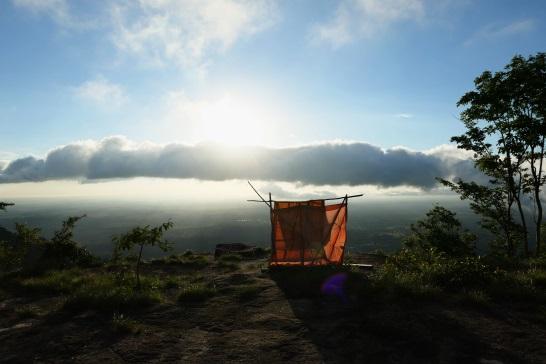
The rocky cliff in front of the pagoda allows us to enjoy the view over the countryside, the forest-covered hills and the loud monkeys from down below. We set up our hammocks in the sala that welcomes passers-by. Out of curiosity we ask the people living in the mountain if they had ever seen other foreigners come up on the plateau and they all answered that as far as they could remember, nobody had ever seemed to venture up to their remote lands a part from us.

Shortly after sunset, we ate a delicious meal prepared by the old women from the village. After a cool night we wake up early before sunrise to make the most of the breathtaking sight that is set before our eyes us from the edge of the cliff. Magical moments shared with our fellow travelers.

Rapidly, the sun rises above the horizon and it is the heart filled with joy thanks to privileged moments shared that we begin the return journey… A 4h walk is needed to reach the vehicle that will take us back home… home sweet home but we will come back soon.

Archive Blog Detail

Cambodia: A dream beach destination

Cambodia does not have to blush from its coastline.

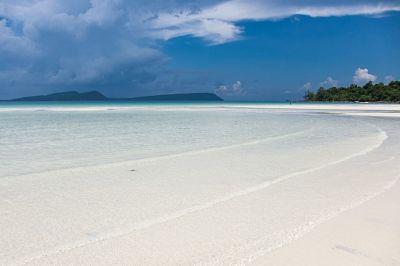
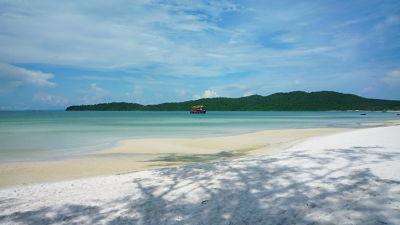
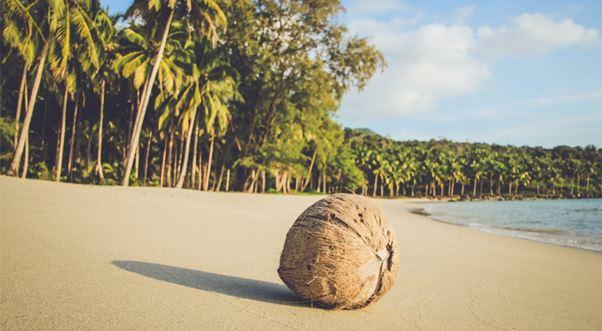
If you like beautiful beaches, the beaches of Koh Rong are the perfect choice for you. Less touristically developed than its Thai neighbour, the Cambodian coasts also have their share of paradise islands, real treasure of the Gulf of Thailand. Koh Rong and Koh Rong Samloem are part of these treasures. The island of Koh Rong is about 2 hours from the coast of Sihanoukville in southern Cambodia, in the center, a jungle, coconut trees, waterfalls and a lake. Put on your masks and snorkel, we will take you to paradise in the bay of Saracen!

why an amazing destination?

The beaches of Cambodia, or certainly the surprise destination for:

  • Those who like to explore the most beautiful without snuggling with hundreds of other tourists.
  •  Its quality, an immaculate white sand, a water of infinite transparency, a sea that spreads all the shades of green and blue, trees that extend their soft shade favourable to nap.
  •  Its opportunity to trek in a lush jungle where friendly locals await you for an unforgettable stay.
  • The possibility to practice many sports activities of all levels: walking, diving, snorkelling, kayaking etc.

what to do in koh rong samloen?

Apart from the beach, the island offers many activities:

  • The scuba diving center offers fun dive, see ray fish, guppies … or colourful parrot fish
  • For those who prefer to stay on the surface, it is possible to make boat trips to discover the seabed by snorkelling. 
  • You can also go fishing on the boat of a local fisherman.
  • Or more, you can go on a photo safari and photograph the island from every angle.
  • But the most wonderful feeling is still sighting the first sunrise moments on the beautiful beach. You can observe phosphorescent plankton. In the nights of the crescent moon, you can also watch the bioluminescence – which are the bio-luminescent phytoplankton that create an underwater sparkling scene.

what are the places to stay in saracen bay The Moonlight Resort


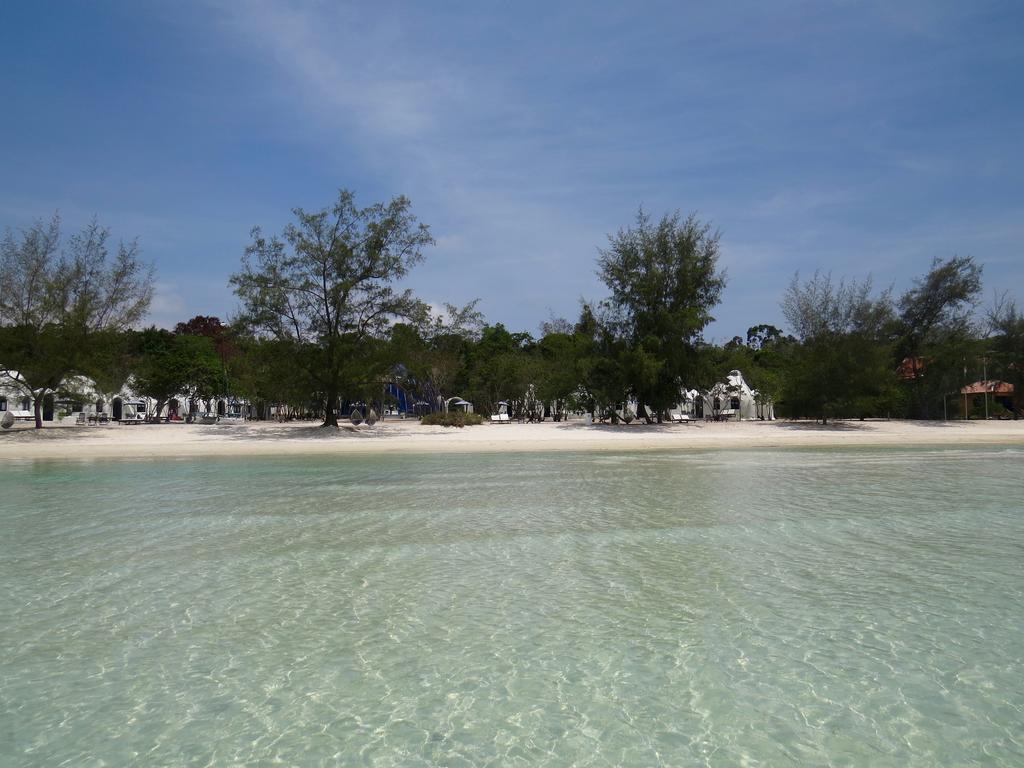
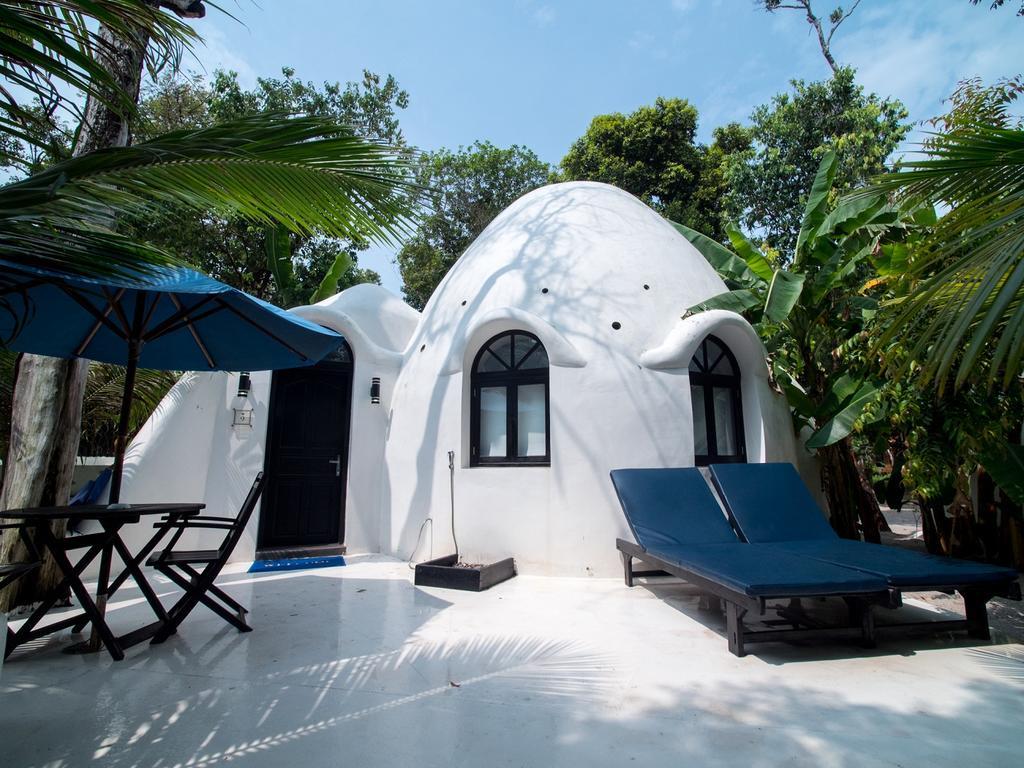
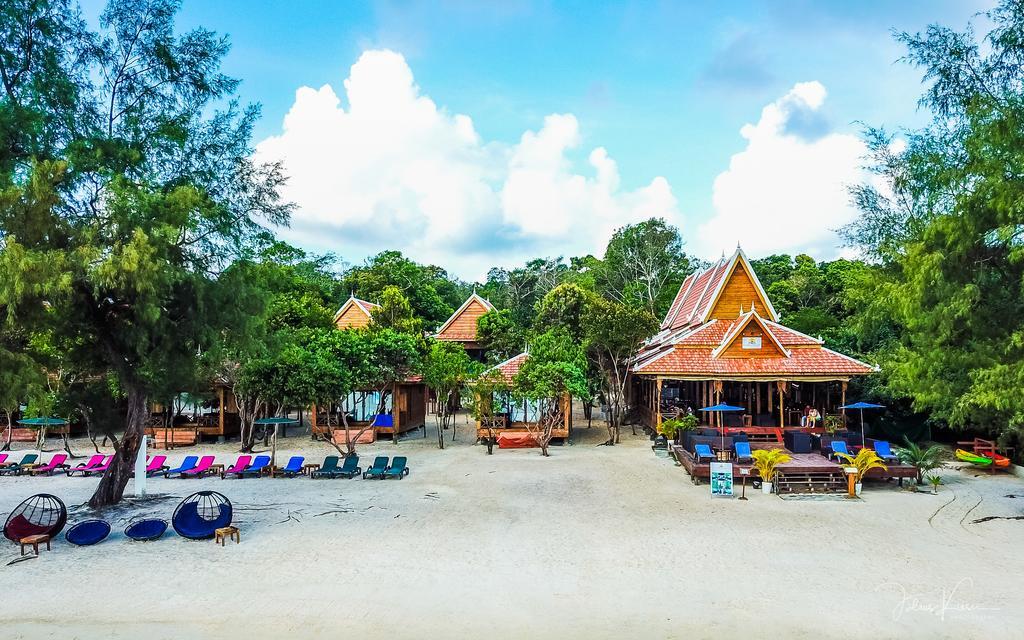
This European-managed Resort is situated just 40 minutes from the Cambodian mainland, on the 6 Km tropical beach of Saracen Bay on Koh Rong Sanloem. The award-winning, eco-designed dome bungalows are the perfect place to enjoy one’s stay whilst experiencing the stunning scenery. All domes have a bed placed under a round skylight, enabling you to fall asleep under the natural glow of the moonlight.

The Moonlight Resort offers a number of excursions to the white untamed beaches and surrounding local fisherman’s villages, offering guided fishing trips, canoeing, diving, and more.

Sol Beach Resort

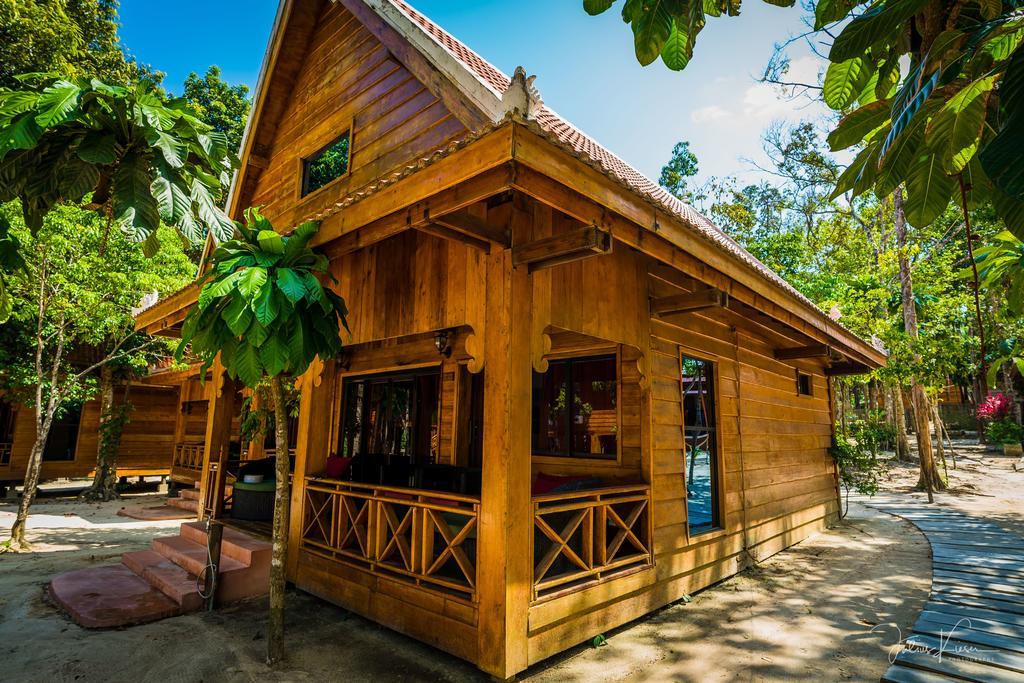
Sol Beach Resort offers beachfront Khmer-style accommodation in Saracen Bay on Koh Rong Samloem Island. Guests can enjoy meals in the open-air restaurant.
Villas at the resort have sea views. Some units have views of the garden or a seating area.
At an additional cost, guests can enjoy various activities in the surroundings such as fishing, boating, hiking and snorkelling.

treat yourselves and let ASIAMYWAY manage your next seaside holidays!!

Archive Blog Detail

Cambodia: TONLE SAP LAKE

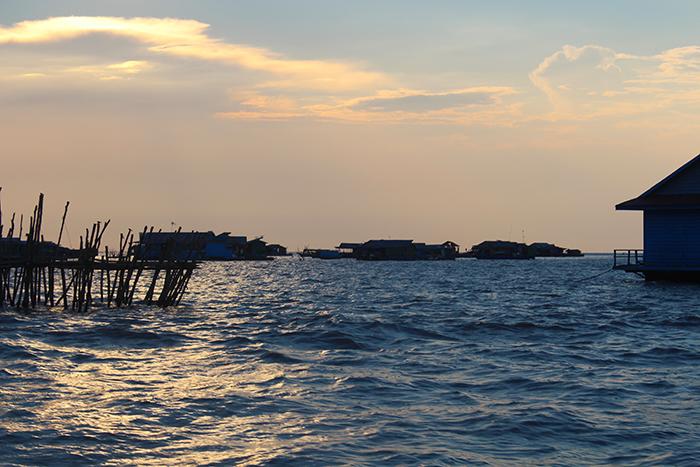
In the heart of Cambodia, in the Southern area of Siem Reap is the Tonle Sap Lake, named after the Khmer  បឹងទន្លេសាប, (Boeung Tonle Sap) meaning « great river of fresh water », more frequently translated as « great lake ». For Cambodians, it is a site of vital importance from an ecological, economic, social and cultural point of view.

A UNIQUE NATURAL PHENOMENON 

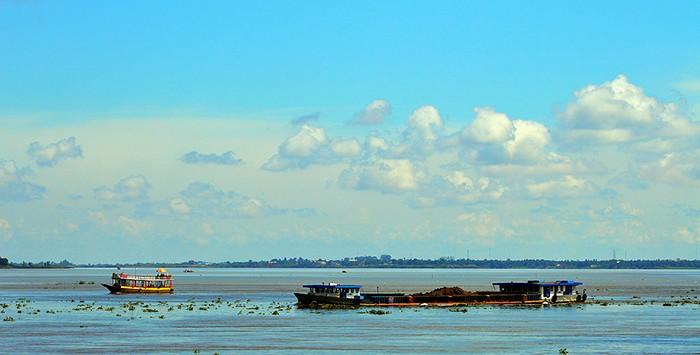
The Tonle Sap serves as a regulator to the Mekong thanks to a world’s unique natural phenomenon: the water flow reverses during the year! During the dry season (from November to May) the Mekong River flows up the Tonle Sap, then during the rainy season (from June to October) the current reverses again. Indeed, the Mekong River, abundant by heavy rains and the Himalayan melting snow, surpasses that of the Tonle Sap River, which then flows into the southern sea. At this season the surface of the lake can reach 16.000km2 making it one of the biggest of the world!

A MAJOR ECOLOGICAL ASSET

Asserted as a biosphere reserve by the UNESCO since 1997, the Tonle Sap Lake is a major ecological asset for Cambodia. Indeed, the successive floods and downpours of the Great Lake gives birth to an exceptional biodiversity which is of capital importance for this small country. The Tonle Sap is home to over 300 species of fish, as well as countless reptiles and mammals. But it is also a real ornithological reserve where one can observe more than 100 different species of birds.

CAMBODIA’S FOSTER MOTHER

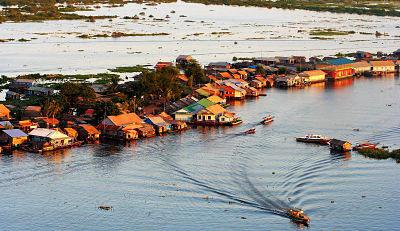
The Tonle Sap is a huge food reserve: it is indeed one of the most productive areas in the world ensuring food for a large part of the Cambodian population! More than three million people live around the lake and its flooded plains, more than a quarter of Cambodia’s total population and 90% of them earn their living from fishing and agriculture or activities dependent of it such as market gardening or pig and poultry farming.

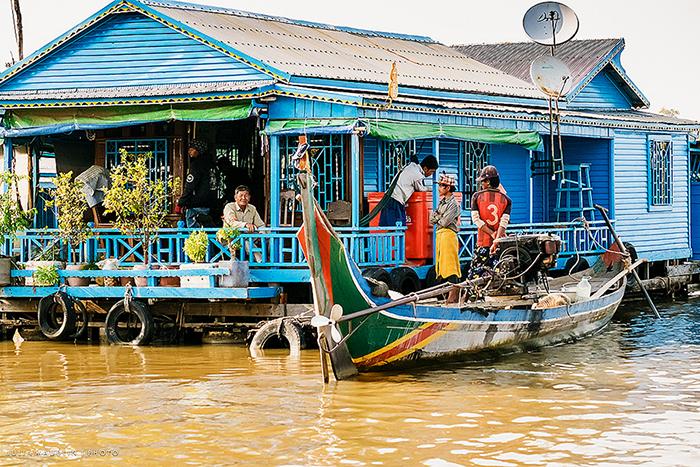
Most of these inhabitants live in floating villages on the lake. There are three different types of housing:

-Most frequent: houses on stilts (made of wood or palm leaves)

-Floating houses made mostly of bamboo (attached between them and movable)

-Fisherman boat houses


Activities at TONLE SAP lake

wondering how you can enjoy the wonders of this beautiful lake?

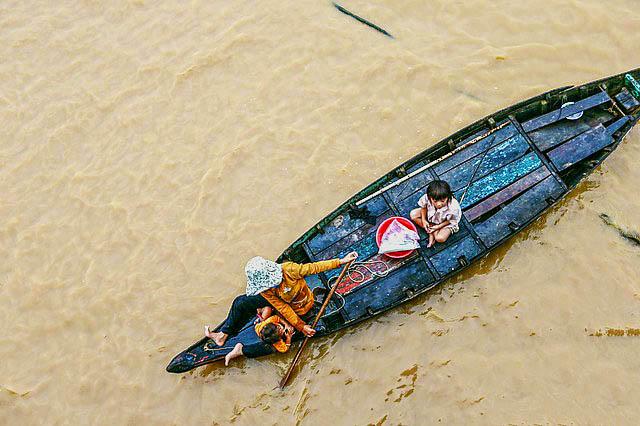
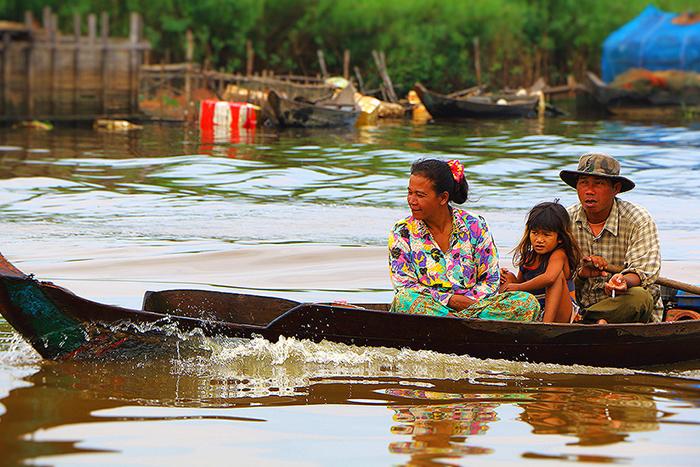
Very simple: board a small traditional wooden boat!

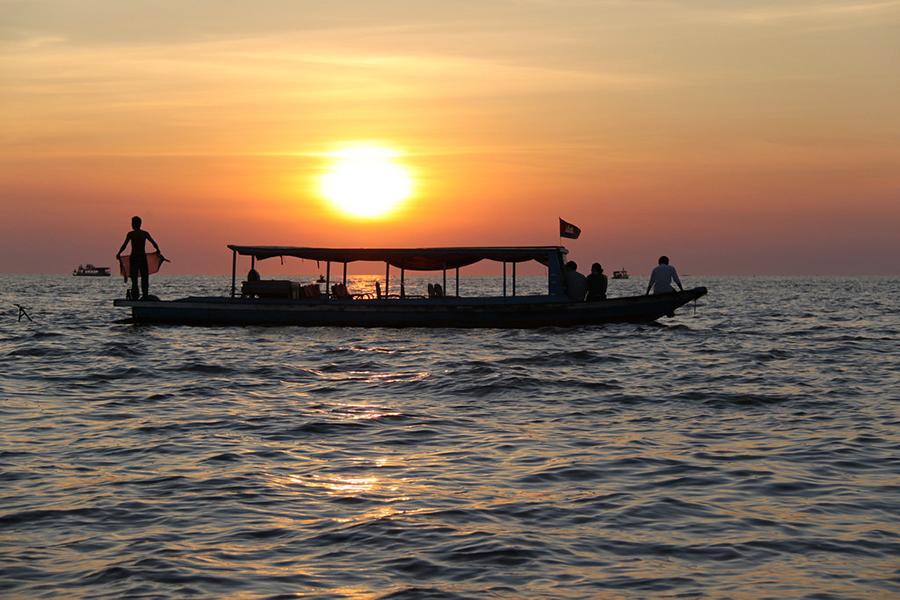
1h, 2h, half a day or more. You can discover these famous floating villages and markets, visit the ornithological sanctuary, enjoy a relaxing moment or a dinner on board at sunset or even take the boat to Phnom Penh!

Archive Blog Detail

Festivals & Celebrations in South East Asia

Asian festivals are among the most exotic and spectacular in the world! The month of November in South East Asia coincides with the end of the rainy season, the harvest period, the beginning of the dry season, which involves a number of celebrations and when it comes to honouring the spirits, Asians do not skimp on the means! On the program: illuminations, parades, traditional dance demonstrations, boat races, etc.
It’s worth synchronizing your trip to Asia with one of these celebrations! So if you have the chance to travel to South East Asia before the end of the year, here is a list of Festivities not to be missed!


Thailande – Loy Krathong /   CHIANG MAI – yee peng 

Venue : November 

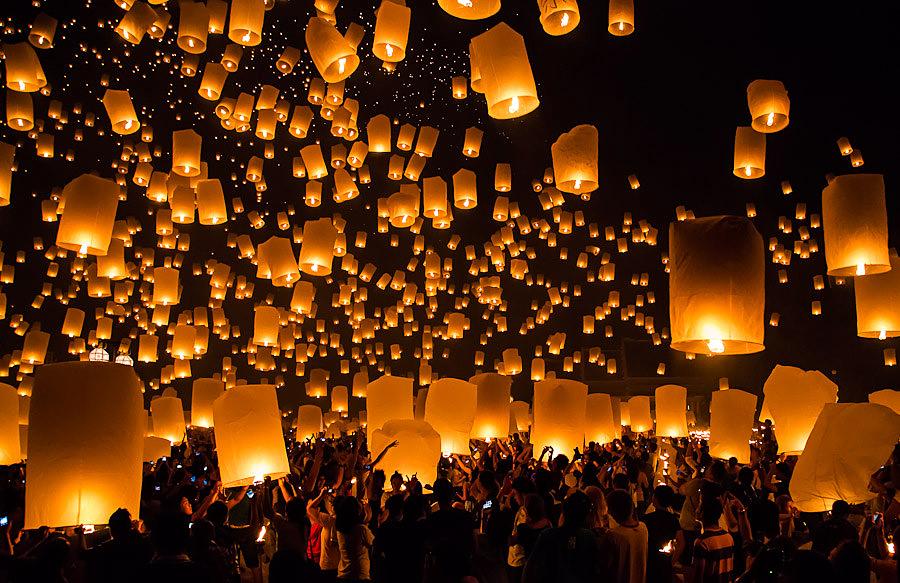
Every year in Thailand, Loy Kratong, also known as the Festival of Lights, is held where thousands of candlelit paper lanterns are released into the sky and onto the Ping River, one of the country’s most important cultural events. The festival takes place on the full moon of the 12th lunar month of the Thai calendar (usually in mid-November). The release of the lanterns symbolizes for the Thais the « letting go of all the bad spirits and misfortunes of the previous year ».
In Chiang Mai, the celebration of Loy Krathong is known as Yee Peng, again as part of the 12th month of the Thai lunar calendar, the 2nd month of the traditional calendar of the Lanna ancient kingdom.
Generally speaking, the festival is celebrated throughout the country for 2 days, in Chiang Mai, its duration can reach up tp one week during which many presentations and events take place, including parades, fireworks, sound and light shows, the Lanna style decoration contest, but the most awaited of all is the famous beauty contest bringing together, all in one a parade, the most beautiful women of Chiang Mai province.

To celebrate the Festival of Lights, people from northern Thailand often use 4 different types of lanterns, which are called Khom. They are made from paper, inside which is placed a candle to illuminate the whole.
Khom Theua: is a small lantern that people wear during the parade. Later, it will be used to decorate temples.
Khom Kwaen: is a small lantern that is hung from temples as an offering to Buddha. They can take 4 forms depending on the context: the alms bowl, a star, a wheel and a basket
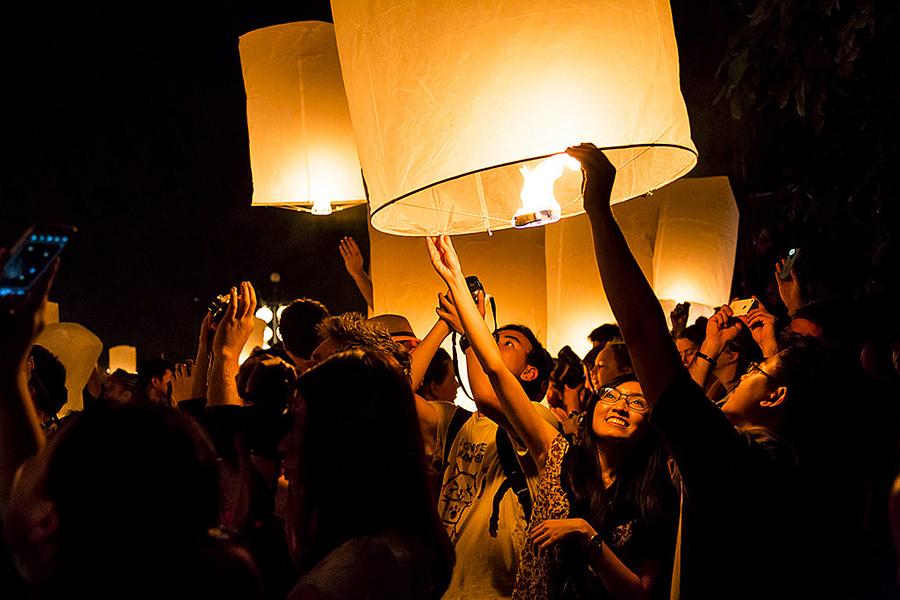
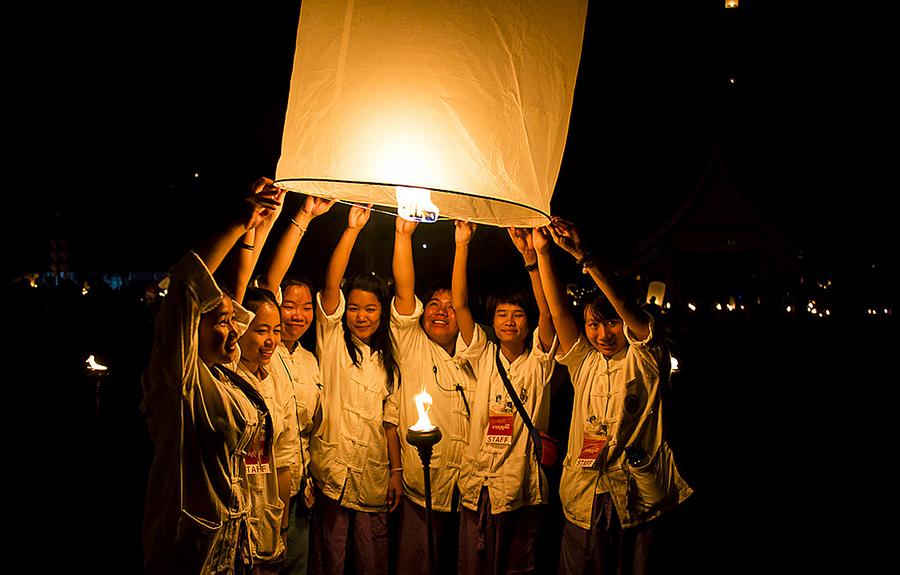
Khom Loy: Also known as Khom Fai, it is a cylindrical paper measuring 1m high, inside of which are placed some firecrackers and explosives that are supposed to explode once the balloon is thrown into the air. The launch of the Khom Loy in Chiang Mai is an exceptional event. During that time, the sky is covered with a mass of illuminated balloons whose reflection on the water provides a dazzling spectacle. It’s an emotionally rich experience that’s really worth a visit!
Khratong: (or floating light) It is made from banana leaves whose shape is closely related to that of the lotus. The Khratong contains a lit candle, some flowers to decorate and incense to perfume it. The inhabitants drop these small boats off along rivers and other water points, not only to thank the water goddess (this festival marks the end of the rainy season) but also to atone for the mistakes made throughout the year.

laos - boun ok phansa / boun lai heua fai

Venue: November

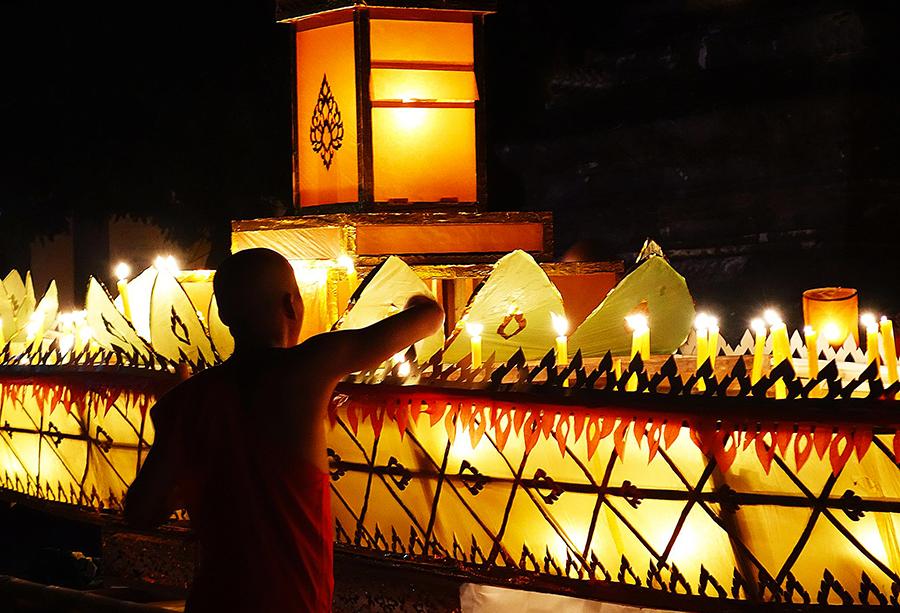
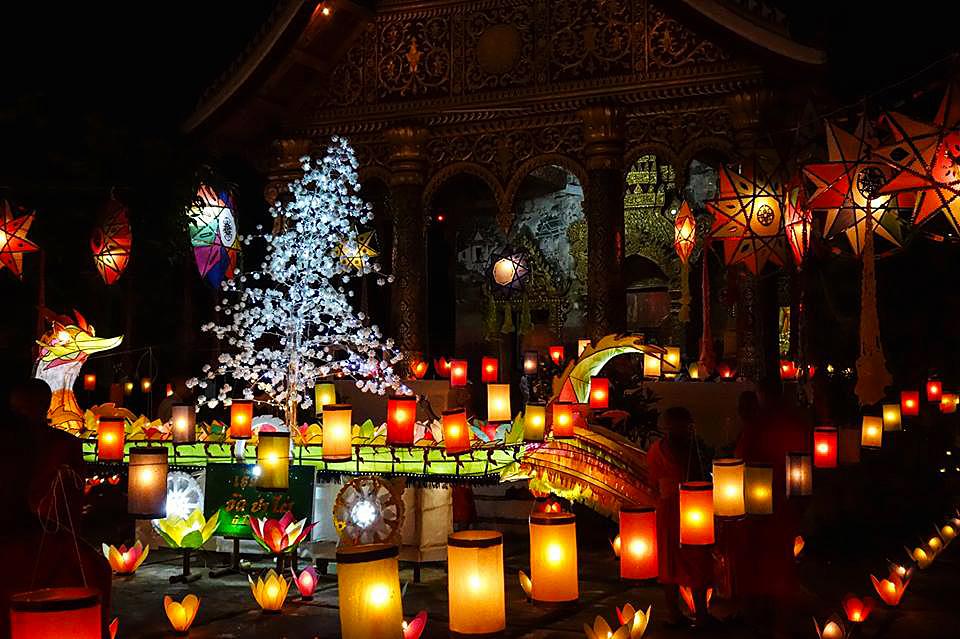
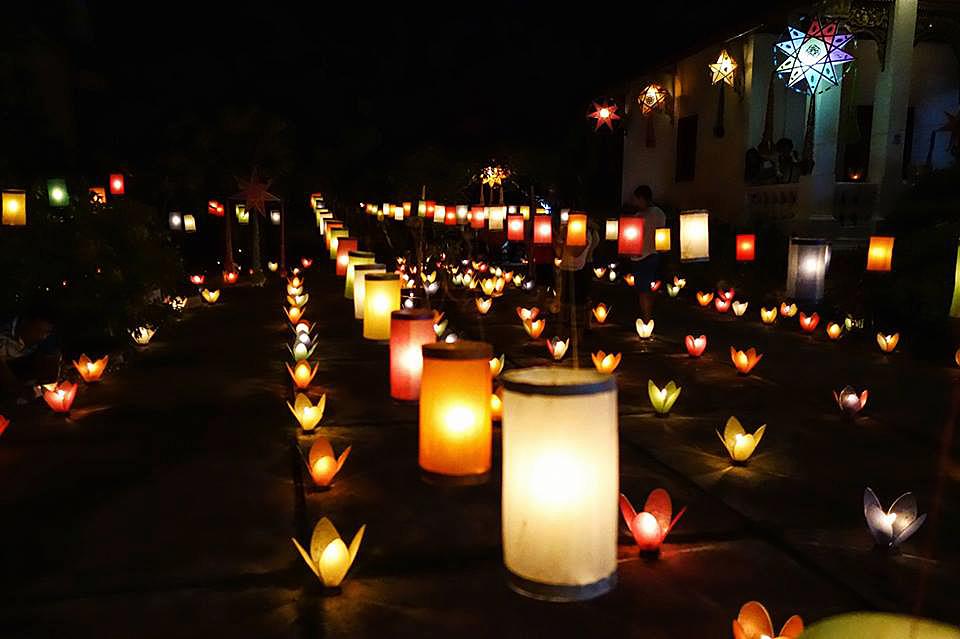
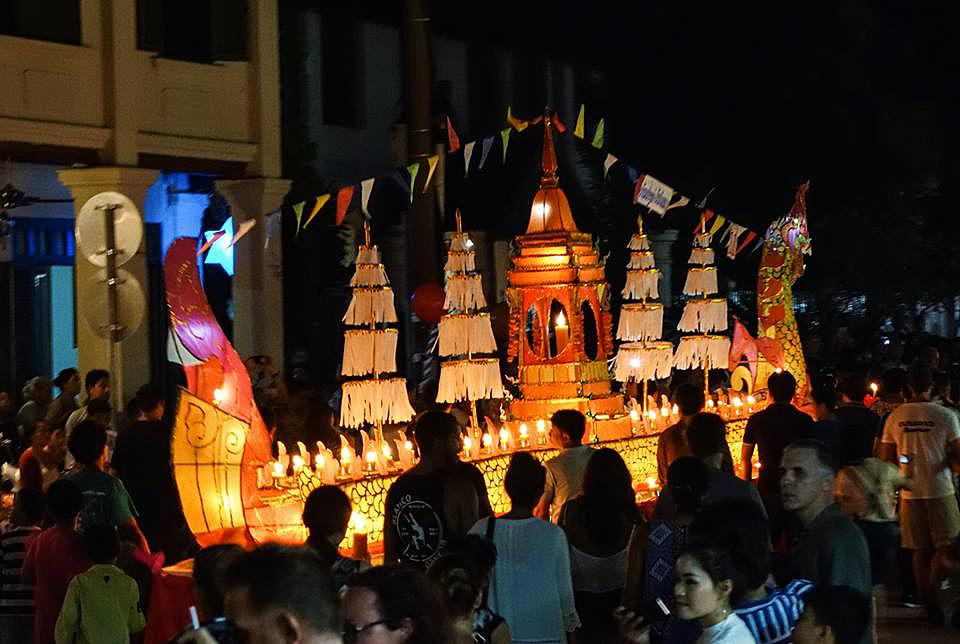
In Laos, Boun Ok Phansa is the holy day marking the end of Buddhist Lent and the end of the rainy season; the next day is Boun Lai Heua Fai: the festival of boat lanterns (taking place the next day) which pays tribute to the Mekong and the dead, it is one of the most important celebrations in the country ! Traditionally, Boun Ok Phansa is an opportunity to honour the spirits of the Mekong. We think that disease, bad luck and all that is negative can be carried away by the river. In the weeks before this festival, novices and monks decorate the temples with paper lanterns and villages make their boat lanterns out of bamboo and paper. The temples are all nicely lit, so that everyone walks from temple to temple at night. On the big day, the lanterns of the big boats are lit and are marched along the main street to Wat Xieng thong where they descend into the Mekong. People buy or make lanterns from banana tree trunks and flowers, light them, make a wish and put them in the river. The whole river seems to be lighting up, it’s a spectacular night. 

cambodia – water festival / boat race

Venue: November

Bon Om Touk, also known as the « Water Festival », is an annual Cambodian celebration that takes place mainly in Phnom Penh, the capital of Cambodia, but also in Angkor. Bon Om Touk is a celebration of the end of the rainy season at the full moon of the Buddhist month of Kadeuk. The full moon is considered a good luck charm that can lead to an abundant harvest. On the Western calendar, Bon Om Touk falls in October or early November.
Heavy monsoon rains cause the Mekong River to reverse its course and push back into the very large Tonle Sap Lake, far upstream. The lake therefore overflows its normal limits, which provides a lot of water for the main event in Bon Om Touk, the annual pirogue race. Once the Mekong River and the Tonle Sap River, which connects the Mekong River to Tonle Sap Lake, begin to flow back to the sea, you know it is almost time for Bon Om Touk. The withdrawal of the water also leaves rich sediments that will help local farmers in the upcoming year. However, be aware that in years of low water, the annual boat race can be cancelled.
For three consecutive days, the celebrations continue, with people from all over Cambodia coming to Phnom Penh to take part in the festivities. Day and night, the celebration continues. Activities include music concerts, traditional dance demonstrations and Aboriginal food feasts. The regatta often includes up to 400 racing boats, each decorated with bright colours and rowed by about forty men, who are usually monks. There are prizes for the winners, and dancers and drummers on board that keep the rowers in the right rhythm.

myanmar - hot air balloon festival - taungyi

Venue: 17-22 November 2018

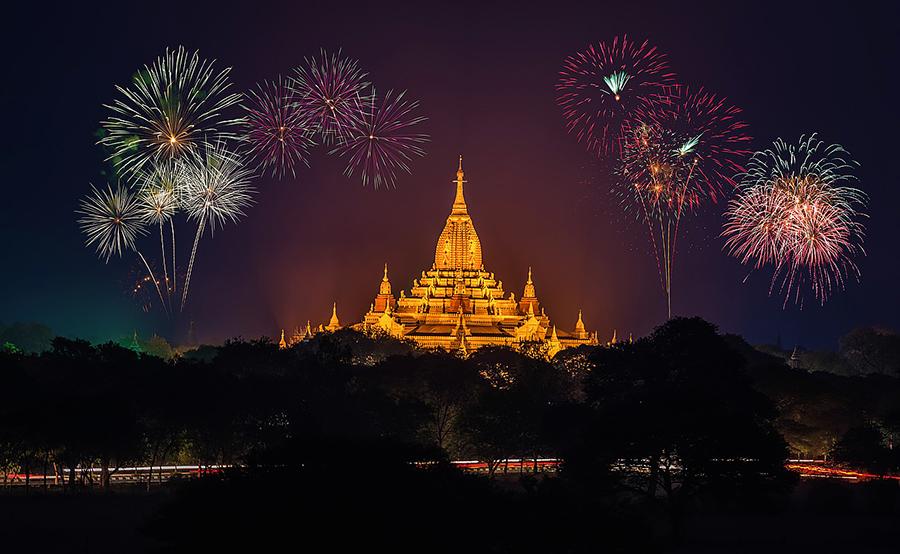
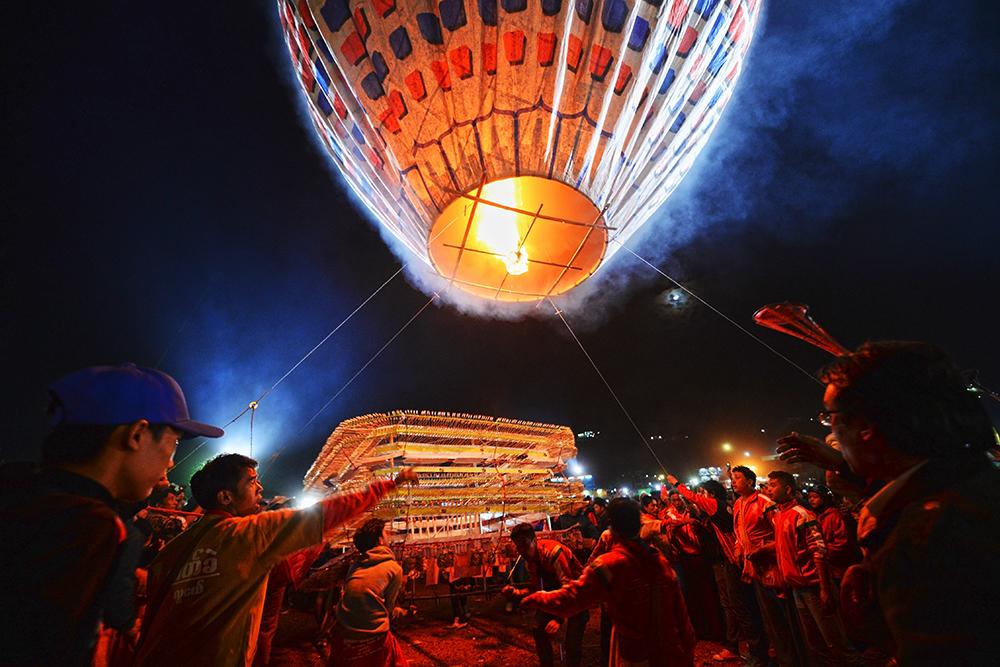
The festival takes place every year, during the full moon of November, this year, from 17th to 22nd November in Taunggyi, capital of Shan State. This is an important month that marks the end of the rainy season and the beginning of winter. The « Hot Air Balloon » festival is one of Burma’s most popular events, each year balloons are sent to the sky as a sign of offering to the good spirits and as a tribute to the Sulamani Pagoda.
The Tazaungdaing festival takes place over a week: 5 days of qualifying and two days of finals. It ends on the day of the full moon in November. The teams, representing the different districts of Taunggyi, are preparing for a year of competition. The objective is to successfully fly the most elaborate and decorated balloon. Hot air balloons are made of paper, by hand. They are decorated with fireworks, firecrackers and candles. Every evening, music and parades accompany the placement of the balloons on the central lawn.

vietnam - Ooc Om bok

Venue: November 

Ooc Om Bok is one of the liveliest festivals in the Khmer calendar. The Vietnamese of the Mekong Delta take this opportunity to thank the god of the moon for the good rice harvests and abundant fish catches, and to celebrate the end of the Khmer year. Fruits and vegetables are offered as an offering to the gods at midnight. Thousands of visitors gather to attend boat races, and ethnic dance and music are guaranteed. It is also an opportunity to celebrate the end of the rainy season and the beginning of the dry season.
The harvest period is very important and this is one of the main reasons for the celebration. If you travel to Vietnam, the harvest period is extremely interesting. The rice fields that were flooded when the rice was planted are now dry and the golden rice gives the rice fields a completely different appearance.

Archive Blog Detail

Festivals & Celebrations in South East Asia

Asian festivals are among the most exotic and spectacular in the world! The month of November in South East Asia coincides with the end of the rainy season, the harvest period, the beginning of the dry season, which involves a number of celebrations and when it comes to honouring the spirits, Asians do not skimp on the means! On the program: illuminations, parades, traditional dance demonstrations, boat races, etc.
It’s worth synchronizing your trip to Asia with one of these celebrations! So if you have the chance to travel to South East Asia before the end of the year, here is a list of Festivities not to be missed!


Thailande – Loy Krathong /   CHIANG MAI – yee peng 

Venue : November 

Every year in Thailand, Loy Kratong, also known as the Festival of Lights, is held where thousands of candlelit paper lanterns are released into the sky and onto the Ping River, one of the country’s most important cultural events. The festival takes place on the full moon of the 12th lunar month of the Thai calendar (usually in mid-November). The release of the lanterns symbolizes for the Thais the « letting go of all the bad spirits and misfortunes of the previous year ».
In Chiang Mai, the celebration of Loy Krathong is known as Yee Peng, again as part of the 12th month of the Thai lunar calendar, the 2nd month of the traditional calendar of the Lanna ancient kingdom.
Generally speaking, the festival is celebrated throughout the country for 2 days, in Chiang Mai, its duration can reach up tp one week during which many presentations and events take place, including parades, fireworks, sound and light shows, the Lanna style decoration contest, but the most awaited of all is the famous beauty contest bringing together, all in one a parade, the most beautiful women of Chiang Mai province.

To celebrate the Festival of Lights, people from northern Thailand often use 4 different types of lanterns, which are called Khom. They are made from paper, inside which is placed a candle to illuminate the whole.
Khom Theua: is a small lantern that people wear during the parade. Later, it will be used to decorate temples.
Khom Kwaen: is a small lantern that is hung from temples as an offering to Buddha. They can take 4 forms depending on the context: the alms bowl, a star, a wheel and a basket
Khom Loy: Also known as Khom Fai, it is a cylindrical paper measuring 1m high, inside of which are placed some firecrackers and explosives that are supposed to explode once the balloon is thrown into the air. The launch of the Khom Loy in Chiang Mai is an exceptional event. During that time, the sky is covered with a mass of illuminated balloons whose reflection on the water provides a dazzling spectacle. It’s an emotionally rich experience that’s really worth a visit!
Khratong: (or floating light) It is made from banana leaves whose shape is closely related to that of the lotus. The Khratong contains a lit candle, some flowers to decorate and incense to perfume it. The inhabitants drop these small boats off along rivers and other water points, not only to thank the water goddess (this festival marks the end of the rainy season) but also to atone for the mistakes made throughout the year.

laos - boun ok phansa / boun lai heua fai

Venue: November

In Laos, Boun Ok Phansa is the holy day marking the end of Buddhist Lent and the end of the rainy season; the next day is Boun Lai Heua Fai: the festival of boat lanterns (taking place the next day) which pays tribute to the Mekong and the dead, it is one of the most important celebrations in the country ! Traditionally, Boun Ok Phansa is an opportunity to honour the spirits of the Mekong. We think that disease, bad luck and all that is negative can be carried away by the river. In the weeks before this festival, novices and monks decorate the temples with paper lanterns and villages make their boat lanterns out of bamboo and paper. The temples are all nicely lit, so that everyone walks from temple to temple at night. On the big day, the lanterns of the big boats are lit and are marched along the main street to Wat Xieng thong where they descend into the Mekong. People buy or make lanterns from banana tree trunks and flowers, light them, make a wish and put them in the river. The whole river seems to be lighting up, it’s a spectacular night. 

cambodia – water festival / boat race

Venue: November

Bon Om Touk, also known as the « Water Festival », is an annual Cambodian celebration that takes place mainly in Phnom Penh, the capital of Cambodia, but also in Angkor. Bon Om Touk is a celebration of the end of the rainy season at the full moon of the Buddhist month of Kadeuk. The full moon is considered a good luck charm that can lead to an abundant harvest. On the Western calendar, Bon Om Touk falls in October or early November.
Heavy monsoon rains cause the Mekong River to reverse its course and push back into the very large Tonle Sap Lake, far upstream. The lake therefore overflows its normal limits, which provides a lot of water for the main event in Bon Om Touk, the annual pirogue race. Once the Mekong River and the Tonle Sap River, which connects the Mekong River to Tonle Sap Lake, begin to flow back to the sea, you know it is almost time for Bon Om Touk. The withdrawal of the water also leaves rich sediments that will help local farmers in the upcoming year. However, be aware that in years of low water, the annual boat race can be cancelled.
For three consecutive days, the celebrations continue, with people from all over Cambodia coming to Phnom Penh to take part in the festivities. Day and night, the celebration continues. Activities include music concerts, traditional dance demonstrations and Aboriginal food feasts. The regatta often includes up to 400 racing boats, each decorated with bright colours and rowed by about forty men, who are usually monks. There are prizes for the winners, and dancers and drummers on board that keep the rowers in the right rhythm.

myanmar - hot air balloon festival - taungyi

Venue: 17-22 November 2018

The festival takes place every year, during the full moon of November, this year, from 17th to 22nd November in Taunggyi, capital of Shan State. This is an important month that marks the end of the rainy season and the beginning of winter. The « Hot Air Balloon » festival is one of Burma’s most popular events, each year balloons are sent to the sky as a sign of offering to the good spirits and as a tribute to the Sulamani Pagoda.
The Tazaungdaing festival takes place over a week: 5 days of qualifying and two days of finals. It ends on the day of the full moon in November. The teams, representing the different districts of Taunggyi, are preparing for a year of competition. The objective is to successfully fly the most elaborate and decorated balloon. Hot air balloons are made of paper, by hand. They are decorated with fireworks, firecrackers and candles. Every evening, music and parades accompany the placement of the balloons on the central lawn.

vietnam - Ooc Om bok

Venue: November 

Ooc Om Bok is one of the liveliest festivals in the Khmer calendar. The Vietnamese of the Mekong Delta take this opportunity to thank the god of the moon for the good rice harvests and abundant fish catches, and to celebrate the end of the Khmer year. Fruits and vegetables are offered as an offering to the gods at midnight. Thousands of visitors gather to attend boat races, and ethnic dance and music are guaranteed. It is also an opportunity to celebrate the end of the rainy season and the beginning of the dry season.
The harvest period is very important and this is one of the main reasons for the celebration. If you travel to Vietnam, the harvest period is extremely interesting. The rice fields that were flooded when the rice was planted are now dry and the golden rice gives the rice fields a completely different appearance.

Archive Blog Detail

Cambodia: TONLE SAP LAKE

In the heart of Cambodia, in the Southern area of Siem Reap is the Tonle Sap Lake, named after the Khmer  បឹងទន្លេសាប, (Boeung Tonle Sap) meaning « great river of fresh water », more frequently translated as « great lake ». For Cambodians, it is a site of vital importance from an ecological, economic, social and cultural point of view.

A UNIQUE NATURAL PHENOMENON 

The Tonle Sap serves as a regulator to the Mekong thanks to a world’s unique natural phenomenon: the water flow reverses during the year! During the dry season (from November to May) the Mekong River flows up the Tonle Sap, then during the rainy season (from June to October) the current reverses again. Indeed, the Mekong River, abundant by heavy rains and the Himalayan melting snow, surpasses that of the Tonle Sap River, which then flows into the southern sea. At this season the surface of the lake can reach 16.000km2 making it one of the biggest of the world!

A MAJOR ECOLOGICAL ASSET

Asserted as a biosphere reserve by the UNESCO since 1997, the Tonle Sap Lake is a major ecological asset for Cambodia. Indeed, the successive floods and downpours of the Great Lake gives birth to an exceptional biodiversity which is of capital importance for this small country. The Tonle Sap is home to over 300 species of fish, as well as countless reptiles and mammals. But it is also a real ornithological reserve where one can observe more than 100 different species of birds.

CAMBODIA’S FOSTER MOTHER

The Tonle Sap is a huge food reserve: it is indeed one of the most productive areas in the world ensuring food for a large part of the Cambodian population! More than three million people live around the lake and its flooded plains, more than a quarter of Cambodia’s total population and 90% of them earn their living from fishing and agriculture or activities dependent of it such as market gardening or pig and poultry farming.

Most of these inhabitants live in floating villages on the lake. There are three different types of housing:

-Most frequent: houses on stilts (made of wood or palm leaves)

-Floating houses made mostly of bamboo (attached between them and movable)

-Fisherman boat houses


Activities at TONLE SAP lake

wondering how you can enjoy the wonders of this beautiful lake?

Very simple: board a small traditional wooden boat!

1h, 2h, half a day or more. You can discover these famous floating villages and markets, visit the ornithological sanctuary, enjoy a relaxing moment or a dinner on board at sunset or even take the boat to Phnom Penh!

Archive Blog Detail

Cambodia: A dream beach destination

Cambodia does not have to blush from its coastline.

If you like beautiful beaches, the beaches of Koh Rong are the perfect choice for you. Less touristically developed than its Thai neighbour, the Cambodian coasts also have their share of paradise islands, real treasure of the Gulf of Thailand. Koh Rong and Koh Rong Samloem are part of these treasures. The island of Koh Rong is about 2 hours from the coast of Sihanoukville in southern Cambodia, in the center, a jungle, coconut trees, waterfalls and a lake. Put on your masks and snorkel, we will take you to paradise in the bay of Saracen!

why an amazing destination?

The beaches of Cambodia, or certainly the surprise destination for:

  • Those who like to explore the most beautiful without snuggling with hundreds of other tourists.
  •  Its quality, an immaculate white sand, a water of infinite transparency, a sea that spreads all the shades of green and blue, trees that extend their soft shade favourable to nap.
  •  Its opportunity to trek in a lush jungle where friendly locals await you for an unforgettable stay.
  • The possibility to practice many sports activities of all levels: walking, diving, snorkelling, kayaking etc.

what to do in koh rong samloen?

Apart from the beach, the island offers many activities:

  • The scuba diving center offers fun dive, see ray fish, guppies … or colourful parrot fish
  • For those who prefer to stay on the surface, it is possible to make boat trips to discover the seabed by snorkelling. 
  • You can also go fishing on the boat of a local fisherman.
  • Or more, you can go on a photo safari and photograph the island from every angle.
  • But the most wonderful feeling is still sighting the first sunrise moments on the beautiful beach. You can observe phosphorescent plankton. In the nights of the crescent moon, you can also watch the bioluminescence – which are the bio-luminescent phytoplankton that create an underwater sparkling scene.

what are the places to stay in saracen bay The Moonlight Resort


This European-managed Resort is situated just 40 minutes from the Cambodian mainland, on the 6 Km tropical beach of Saracen Bay on Koh Rong Sanloem. The award-winning, eco-designed dome bungalows are the perfect place to enjoy one’s stay whilst experiencing the stunning scenery. All domes have a bed placed under a round skylight, enabling you to fall asleep under the natural glow of the moonlight.

The Moonlight Resort offers a number of excursions to the white untamed beaches and surrounding local fisherman’s villages, offering guided fishing trips, canoeing, diving, and more.

Sol Beach Resort

Sol Beach Resort offers beachfront Khmer-style accommodation in Saracen Bay on Koh Rong Samloem Island. Guests can enjoy meals in the open-air restaurant.
Villas at the resort have sea views. Some units have views of the garden or a seating area.
At an additional cost, guests can enjoy various activities in the surroundings such as fishing, boating, hiking and snorkelling.

treat yourselves and let ASIAMYWAY manage your next seaside holidays!!

Archive Blog Detail

The Forgotten Hill- Cambodia
Sokleap, our Cambodian Expert, shares the story of one of her scouting trips to Cambodia. Discover her adventures, her encounters, her discoveries. Get to know Cambodia differently and discover the most remote corners of the country.


The last karstic cliff hills still covered by deep forests have secrets that only woodsmen and other hunters of the region know of.


Asia My Way team was merely guided by a friendly team of young Cambodians that are usually more accustomed in carrying bags of cement and other building materials to the top of the hills than to accompany some strayed over-equipped tourists.

The team left the rice fields and crossed rivers before heading deeply onto a forest trail through the jungle. The road was becoming narrower and steeper. 

This path mostly used by pilgrims is partially equipped with wooden ladders and bamboo railings, whose reliability can be somewhat put into doubt.  

Short breaks during the climb gave the possibility to appreciate step by step the landscapes and the view of the surrounding countryside. The local guides showed the roof of their houses which could be observed from afar.

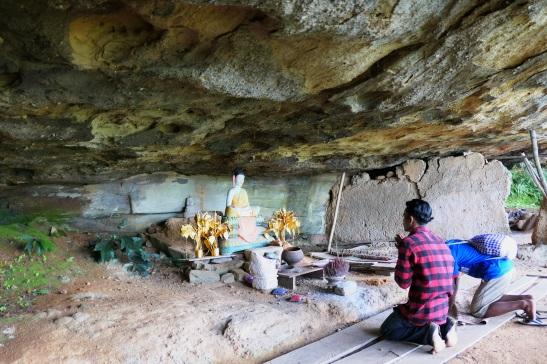
A few meters away from the plateau, the first stop was dedicated to a cave that protects the spirits that take refuge under it and where the remains of a hermitage subsist. The cave is located not far from a fresh water source which is more than welcome after an intensive morning walk.

After lunch the hiking continued on the plateau to reach the pagoda located at another mountain summit. We reach it by late afternoon, which is the ideal time to discover the site and meet its few inhabitants, including a monk to whom we ask hospitality for the night. This man who is fully silent welcomes us by offering us a cup of coffee. His clothes are torn and we take some time to understand that his gestures invite us to sit down and enjoy our hot drink. We explain why we are here and receive a big smile of consent. He finally speaks out to recite a prayer while we make an offering to him and then returns to his mutisme.

The rocky cliff in front of the pagoda allows us to enjoy the view over the countryside, the forest-covered hills and the loud monkeys from down below. We set up our hammocks in the sala that welcomes passers-by. Out of curiosity we ask the people living in the mountain if they had ever seen other foreigners come up on the plateau and they all answered that as far as they could remember, nobody had ever seemed to venture up to their remote lands a part from us.

Shortly after sunset, we ate a delicious meal prepared by the old women from the village. After a cool night we wake up early before sunrise to make the most of the breathtaking sight that is set before our eyes us from the edge of the cliff. Magical moments shared with our fellow travelers.

Rapidly, the sun rises above the horizon and it is the heart filled with joy thanks to privileged moments shared that we begin the return journey… A 4h walk is needed to reach the vehicle that will take us back home… home sweet home but we will come back soon.